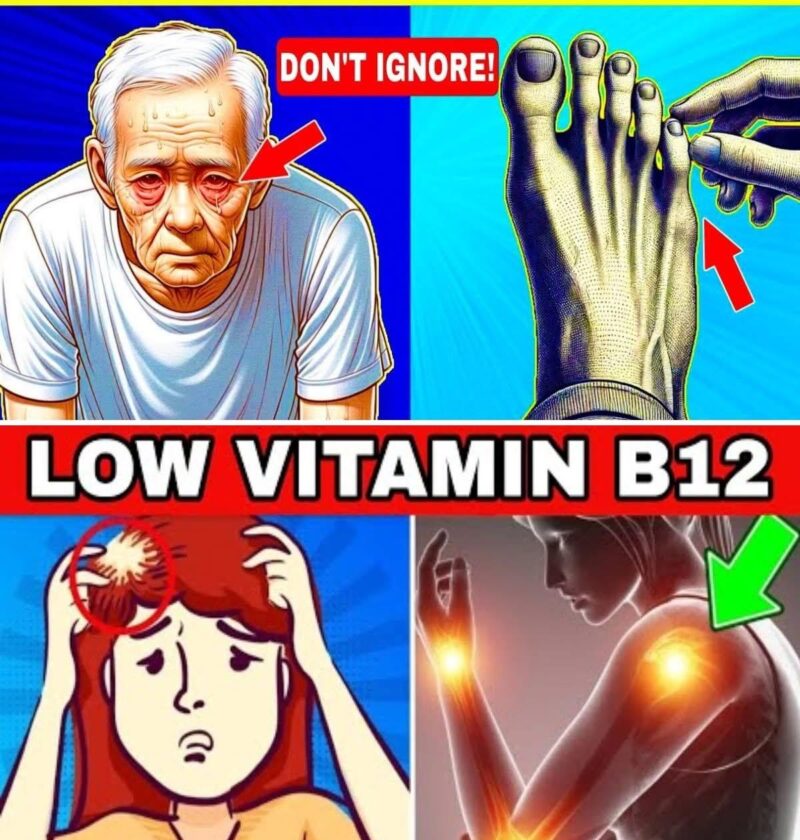
Headlines like “9 hidden signs your body needs more vitamin B12” are common online, but they often oversimplify things. Vitamin B12 deficiency does exist, but the only reliable way to confirm it is through a blood test, not symptoms alone.
That said, here are symptoms that can be associated with low vitamin B12 levels:
Possible signs of vitamin B12 deficiency
- Persistent fatigue or low energy
- Tingling or numbness in hands and feet
- Balance problems or unsteady walking
- Memory issues or “brain fog”
- Mood changes (irritability, low mood)
- Pale or slightly yellowish skin
- Sore or inflamed tongue (glossitis)
- Shortness of breath during mild activity
- Heart palpitations in more severe cases
Important context
These symptoms are not specific to B12 deficiency. They can also come from:
- Iron deficiency
- Thyroid problems
- Diabetes (for nerve symptoms)
- Stress, anxiety, or poor sleep
- Other neurological or blood conditions
Who is more at risk of low B12?
- Older adults (reduced absorption with age)
- People who eat little or no animal products (vegan/vegetarian diets)
- People with stomach or intestinal disorders (like gastritis or Crohn’s disease)
- Long-term users of certain medications (such as metformin or acid-reducing drugs)
Reliable sources of vitamin B12
- Meat (beef, liver, poultry)
- Fish and seafood
- Eggs
- Dairy products
- Fortified foods (some cereals and plant milks)
Bottom line
If someone suspects low B12, guessing based on symptoms isn’t reliable. A simple blood test and proper medical advice are the correct way to confirm and treat it.
If you want, tell me your diet or symptoms, and I can help you judge whether B12 deficiency is even likely.