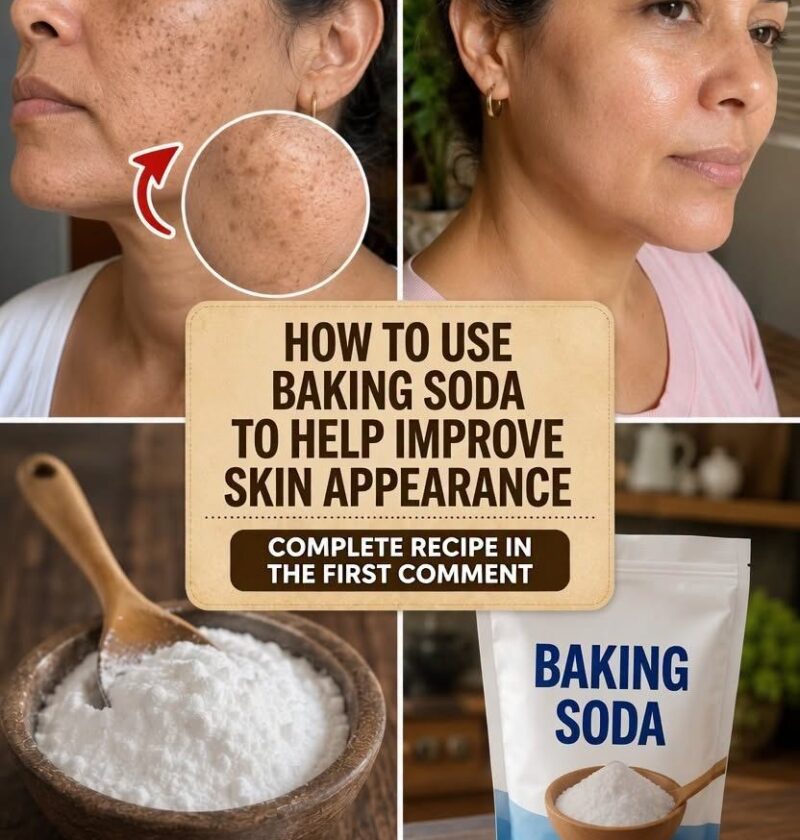
Baking Soda for Your Face: Benefits, Risks, and How to Use It Safely
Baking soda (sodium bicarbonate) is a common household ingredient that some people use in skincare routines. It has mild exfoliating properties and can temporarily change the skin’s surface feel, but it is not considered a standard facial skincare ingredient by many dermatologists because it can disrupt the skin barrier when used incorrectly.
Possible Benefits
1. Mild exfoliation
Baking soda’s fine particles may help remove some dead skin cells when gently applied. This can make skin feel smoother temporarily.
2. Oil absorption
Because it is alkaline and powdery, baking soda may absorb some surface oil, which can make the skin feel less greasy for a short time.
3. Temporary cleansing effect
Some people use diluted baking soda mixtures to remove buildup from the skin, though gentler facial cleansers are usually better suited for regular use.
Risks and Side Effects
1. Skin barrier damage
Healthy skin naturally has a slightly acidic surface (“acid mantle”). Baking soda is alkaline, and frequent use may disturb this balance, leading to:
- Dryness
- Tightness
- Irritation
- Increased sensitivity
2. Redness and inflammation
People with sensitive skin, eczema, rosacea, or acne-prone skin may experience worsening irritation.
3. Over-exfoliation
Using baking soda as a scrub can create tiny abrasions and make skin more vulnerable to irritation.
4. Acne concerns
While some people believe baking soda helps acne, it does not treat the underlying causes of acne and may irritate the skin, potentially making breakouts worse.
If You Choose to Use Baking Soda, Use It Carefully
- Do not use it daily.
- Avoid harsh scrubbing.
- Mix it with plenty of water rather than applying dry powder.
- Patch test first on a small area of skin.
- Stop immediately if you feel burning, itching, or prolonged redness.
- Moisturize afterward to support the skin barrier.
Avoid using baking soda on:
- Broken or damaged skin
- Sunburned skin
- Skin after strong exfoliating treatments
- Very sensitive skin conditions
Safer Alternatives
Depending on your goal:
- For exfoliation: products with gentle ingredients like lactic acid, mandelic acid, or salicylic acid may be more predictable.
- For oil control: a gentle cleanser and a suitable moisturizer can help maintain balance.
- For acne: evidence-based acne ingredients such as benzoyl peroxide or salicylic acid are commonly used.
Bottom line
Baking soda may make skin feel temporarily smoother, but it is not a gentle or universally safe facial treatment. If used at all, it should be used rarely, cautiously, and stopped if irritation occurs. For regular skincare, products designed specifically for facial skin are generally a safer choice.