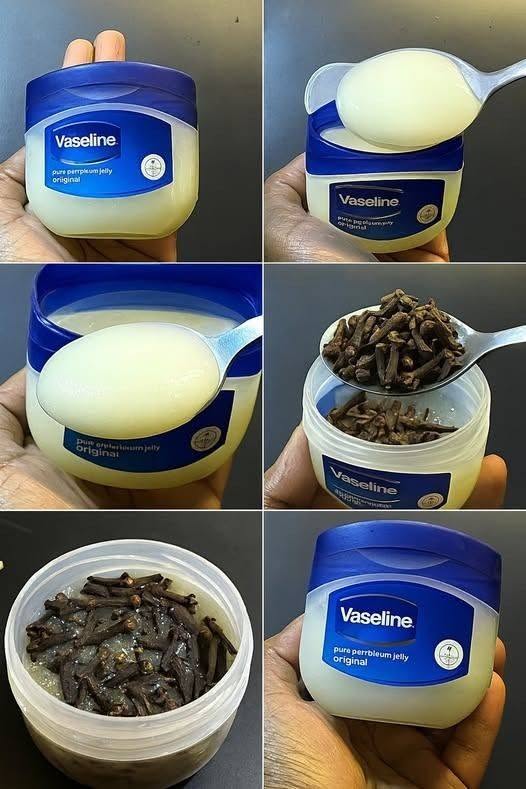
Mixing cloves with petroleum jelly doesn’t have any established, proven health benefit in modern medicine—and it can actually come with risks depending on how it’s used.
What people usually claim it does
Online, this mix is often promoted for:
- Toothache relief
- Skin infections
- Joint pain
- “Numbing” effect
The idea comes from cloves containing eugenol, a compound that can have a mild local numbing and antiseptic effect.
The reality
- Petroleum jelly (petroleum jelly) is an occlusive moisturizer—it traps moisture in skin. It is not designed to carry active herbal compounds into tissue effectively.
- Clove oil or clove powder can irritate skin or mucous membranes, especially when used undiluted or in homemade mixtures.
- Combining them doesn’t reliably improve absorption or effectiveness.
Possible risks
Depending on where it’s applied:
On skin
- Irritation or burning sensation
- Allergic reactions
- Worsening of eczema or sensitive skin
On gums/teeth (if used for tooth pain)
- Gum irritation
- Tissue damage if concentrated clove oil is used
- Temporary masking of pain without treating the cause (like decay or infection)
What actually works better
- For tooth pain: clove oil (properly diluted) can help short-term, but dental care is essential
- For dry skin: plain petroleum jelly is already effective on its own
- For pain or inflammation: evidence-based medications or proper diagnosis are safer
Bottom line
There’s no “secret medical hack” here—just a traditional ingredient (clove) being mixed into a base that doesn’t really enhance it. At best, it’s ineffective; at worst, it can irritate skin or delay proper treatment.
If you tell me what the mixture is being used for (tooth pain, skin, joints, etc.), I can suggest safer and actually effective options.