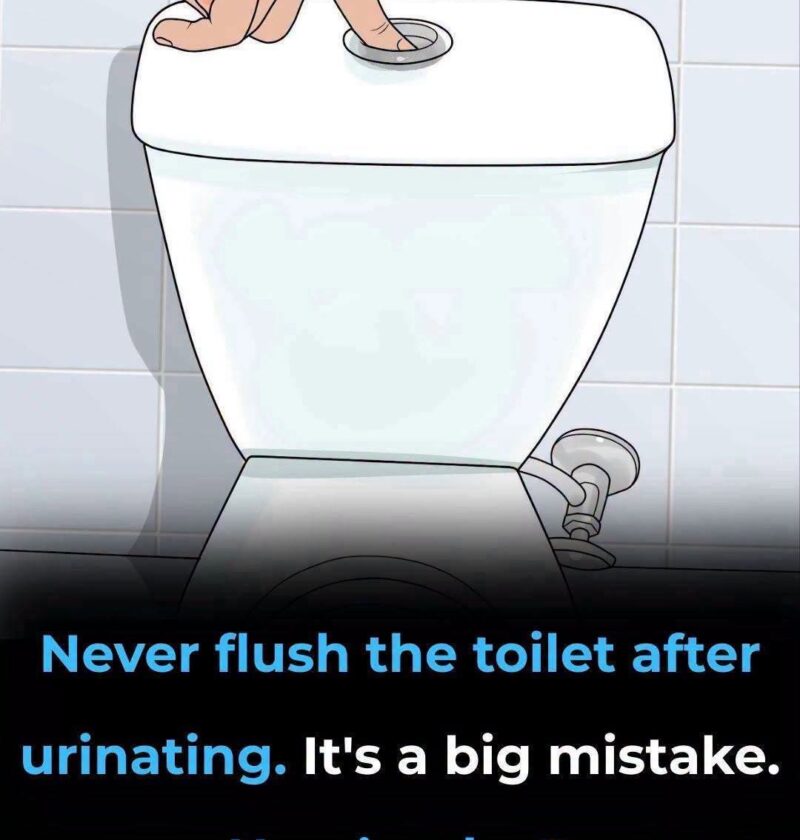
🚽 Why Some People Choose Not to Flush After Every Urination
You may have heard the saying: “If it’s yellow, let it mellow; if it’s brown, flush it down.” The main reason behind this idea is not health—it’s saving water.
A toilet flush can use a significant amount of water, depending on the model. In households trying to reduce water consumption, some people choose not to flush every time after urinating.
Possible benefits:
💧 Lower water use
Reducing unnecessary flushes can help conserve water and may lower water bills.
🌱 More environmentally friendly
Using less water reduces demand on water treatment and supply systems.
When you should flush:
🚽 After a bowel movement
🚽 If odors become noticeable
🚽 In shared bathrooms where hygiene is a concern
🚽 If someone in the household has an infection or illness requiring extra precautions
Keep your bathroom hygienic:
✅ Clean the toilet regularly.
✅ Wash your hands after using the bathroom.
✅ Flush more often if the toilet becomes dirty or unpleasant.
For many people, flushing after every use is completely reasonable. Skipping some flushes is simply a water-saving choice, not a medical requirement.