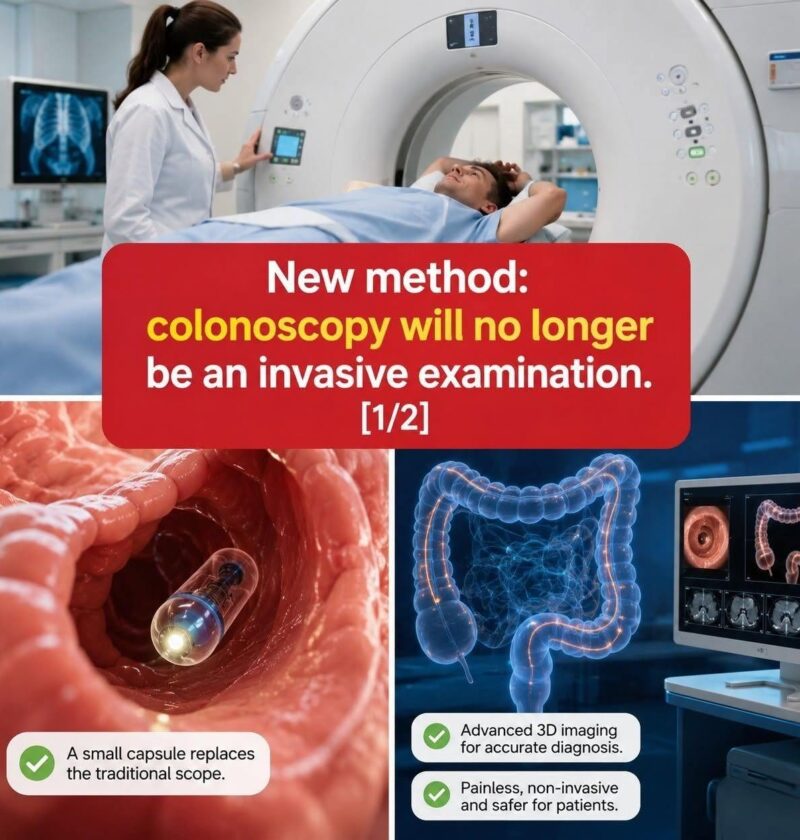
That headline may be referring to newer screening methods that can reduce the need for a traditional colonoscopy in some situations, but it’s an oversimplification. As of today, a standard Colonoscopy is still the most comprehensive test for examining the colon and removing precancerous polyps.
Here are some of the less invasive alternatives that are becoming more common:
- CT colonography (“virtual colonoscopy”): Uses CT imaging to create pictures of the colon. It still requires bowel preparation, and if an abnormality is found, a conventional colonoscopy is usually needed to remove or biopsy it.
- Fecal immunochemical test: A stool test that checks for hidden blood. It’s convenient and noninvasive but must be repeated regularly and doesn’t detect all polyps.
- Multitarget stool DNA test: Combines stool DNA analysis with a blood test for hidden blood. A positive result still requires a colonoscopy for confirmation.
- Capsule endoscopy: A swallowable camera capsule is available for certain patients and indications, but it is not yet a replacement for standard colonoscopy in routine colorectal cancer screening because it cannot take biopsies or remove polyps.
So, while screening is becoming less invasive in some cases, there is not yet a new method that completely replaces colonoscopy for diagnosis and treatment. If a noninvasive test finds something suspicious, a traditional colonoscopy is generally still necessary.
In short, the headline is partly true but exaggerated: newer technologies are expanding screening options, but colonoscopy remains the gold standard when doctors need to directly examine the colon, take tissue samples, or remove polyps.