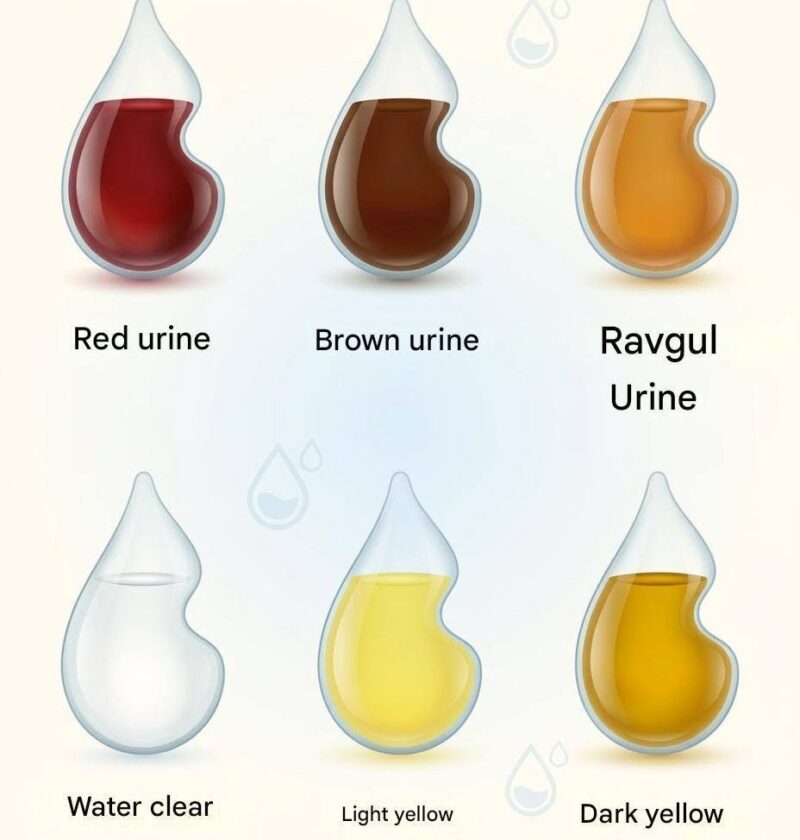
Urine color can provide useful clues about hydration, diet, medications, and sometimes health conditions—but color alone cannot diagnose a disease.
Here’s what different colors may mean:
| Urine color | Common causes | When to seek medical advice |
|---|---|---|
| Pale yellow to light gold | Normal; well hydrated | Usually no concern |
| Dark yellow or amber | Dehydration, first urine in the morning | Drink fluids; see a clinician if it persists despite good hydration |
| Clear | Very well hydrated or drinking large amounts of water | Usually harmless, though consistently clear urine with excessive thirst may warrant evaluation |
| Orange | Dehydration, some vitamins (especially B vitamins), certain medications | Seek advice if accompanied by pale stools, yellow skin/eyes, or abdominal pain |
| Pink or red | Beets, blackberries, food coloring, blood, certain medications | If you’re not sure it’s from food, seek prompt medical evaluation because blood in the urine should be checked |
| Brown or tea-colored | Severe dehydration, liver or bile disorders, muscle injury, some medications | Seek medical evaluation, especially if persistent or accompanied by other symptoms |
| Blue or green | Certain medications, food dyes, rare medical conditions, some urinary infections | Contact a clinician if unexplained or persistent |
| Cloudy | Concentrated urine, crystals, or a Urinary tract infection | Seek evaluation if accompanied by pain, fever, burning, or foul odor |
When to seek medical care promptly
Contact a healthcare provider if you notice:
- Red or cola-colored urine that isn’t clearly explained by food.
- Persistent brown urine.
- Painful urination, fever, or back pain.
- Blood clots in the urine.
- Urine color changes that last several days without an obvious cause.
Bottom line
The healthiest urine color for most people is pale yellow, reflecting good hydration. Temporary changes are often caused by foods, vitamins, or medications, but persistent or unexplained changes—especially red, brown, or cloudy urine with symptoms—should be evaluated by a healthcare professional.