“Aneurysm: Signs You Shouldn’t Ignore”
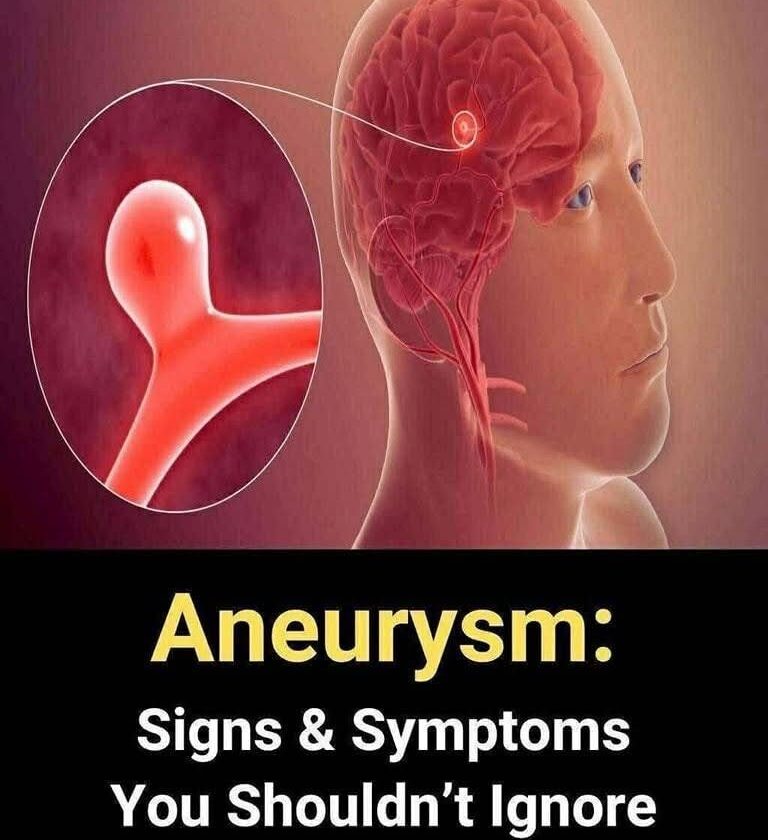
is a health warning headline. An aneurysm is a weakened area in the wall of a blood vessel that bulges or enlarges. Some aneurysms cause no symptoms and are found by chance, but others can become dangerous if they grow or rupture.
Possible warning signs (depend on the location)
Brain aneurysm
Many unruptured brain aneurysms have no symptoms, but possible signs can include:
- A new or unusual headache
- Pain above or behind an eye
- Vision changes
- A drooping eyelid
- Numbness, weakness, or trouble speaking
Possible rupture signs (medical emergency):
- A sudden, severe “worst headache of your life”
- Neck stiffness
- Nausea or vomiting
- Confusion, fainting, seizure
- Sensitivity to light
Aortic aneurysm (major artery)
Symptoms may include:
- Deep, persistent chest or back pain
- A feeling of pressure or fullness in the chest or abdomen
- Shortness of breath or difficulty swallowing (depending on location)
Possible rupture signs:
- Sudden severe chest, back, or abdominal pain
- Dizziness, fainting, rapid heartbeat
- Signs of shock (such as cold, clammy skin)
Abdominal aortic aneurysm (AAA)
Some people have no symptoms, but possible signs include:
- A pulsing feeling in the abdomen
- Persistent abdominal or lower back discomfort
Risk factors that can increase the chance of an aneurysm
- High blood pressure
- Smoking
- Older age
- Family history of aneurysms
- Certain inherited connective tissue disorders
- High cholesterol and vascular disease
When to seek emergency help
Call emergency services for:
- Sudden, severe headache
- Sudden severe chest, back, or abdominal pain
- Fainting, confusion, weakness on one side, or difficulty speaking
Aneurysms can be silent, so symptoms alone do not always identify them. People with significant risk factors may benefit from discussing screening with a healthcare professional.