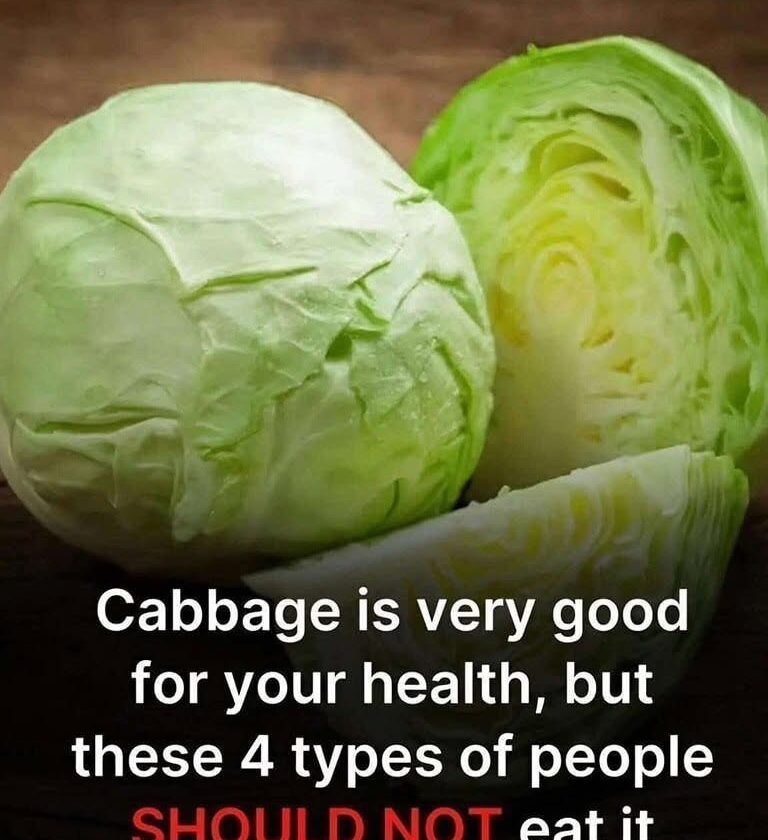
“4 types of people who should avoid eating cabbage”
is a common health headline. Cabbage is a nutritious vegetable for most people, but there are some situations where someone may need to limit it, prepare it differently, or ask a healthcare professional for advice.
1. People with thyroid concerns (especially untreated hypothyroidism)
Cabbage is a cruciferous vegetable and contains compounds called goitrogens, which can affect thyroid hormone production in certain situations.
- Eating normal amounts of cooked cabbage is generally not a problem for most people.
- Very large amounts of raw cruciferous vegetables may be a concern for some people with thyroid issues, especially if iodine intake is low.
2. People prone to gas and bloating
Cabbage contains fermentable carbohydrates and fiber that can cause:
- Gas
- Bloating
- Abdominal discomfort
People with conditions such as irritable bowel syndrome (IBS) may find that cabbage triggers symptoms.
3. People taking certain blood-thinning medications
Cabbage contains vitamin K, which plays a role in blood clotting. People taking medications such as warfarin may need to keep vitamin K intake consistent rather than suddenly eating much larger amounts.
4. People with digestive sensitivities
Those with certain digestive conditions may have trouble tolerating raw cabbage because it is high in fiber. Cooking it may make it easier to digest.
For most people, cabbage can be a healthy choice
It provides:
- Fiber
- Vitamin C
- Vitamin K
- Antioxidants
- Other plant nutrients
The headline “avoid cabbage” is usually an exaggeration. The key is portion size, preparation method, and individual health conditions. If cabbage causes symptoms or you have a medical condition affected by diet, it’s worth discussing your specific situation with a healthcare professional.