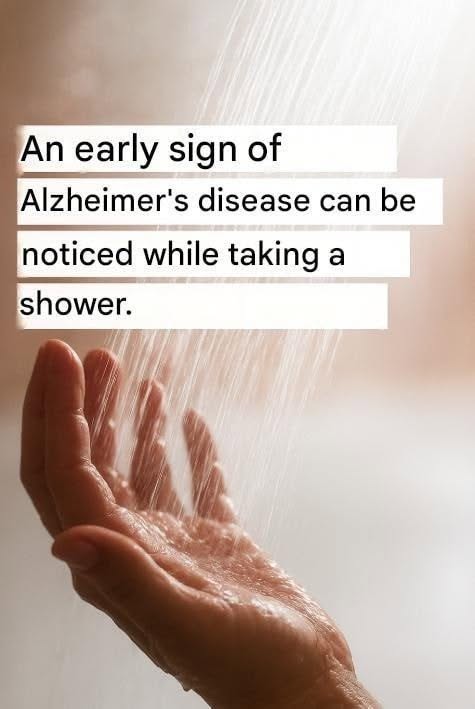
That claim is misleading. There is no single shower-related behavior that is recognized as an early sign of Alzheimer’s disease.
What may have led to the claim is that changes in managing personal hygiene can sometimes occur as dementia progresses. For example, a person might:
- Forget whether they have already showered.
- Have difficulty remembering the steps involved in bathing.
- Wear the same clothes repeatedly or neglect personal hygiene.
- Become confused about how to use the shower safely.
- Avoid bathing because of fear, discomfort, or changes in perception.
However, these changes are not specific to Alzheimer’s disease and usually do not occur as the very first symptom. They can also be caused by depression, physical limitations, medication side effects, other neurological conditions, or normal aging-related challenges.
More common early signs of Alzheimer’s disease
Early Alzheimer’s more often involves:
- Memory problems that interfere with daily life, especially forgetting recently learned information.
- Difficulty planning or solving familiar problems.
- Trouble completing familiar tasks.
- Confusion about time or place.
- Difficulty finding words or following conversations.
- Misplacing items and being unable to retrace steps.
- Poor judgment or decision-making.
- Changes in mood or personality.
When to seek medical evaluation
If someone has persistent memory problems or changes in thinking that interfere with everyday activities, it’s a good idea to see a healthcare professional. Many conditions that affect memory—including medication side effects, sleep disorders, thyroid disease, vitamin deficiencies, depression, and hearing loss—can be evaluated and, in some cases, treated.
So, while difficulties with showering can occur in people with Alzheimer’s disease, they are not a recognized standalone early warning sign, and they should be considered alongside the person’s overall cognitive and functional changes.