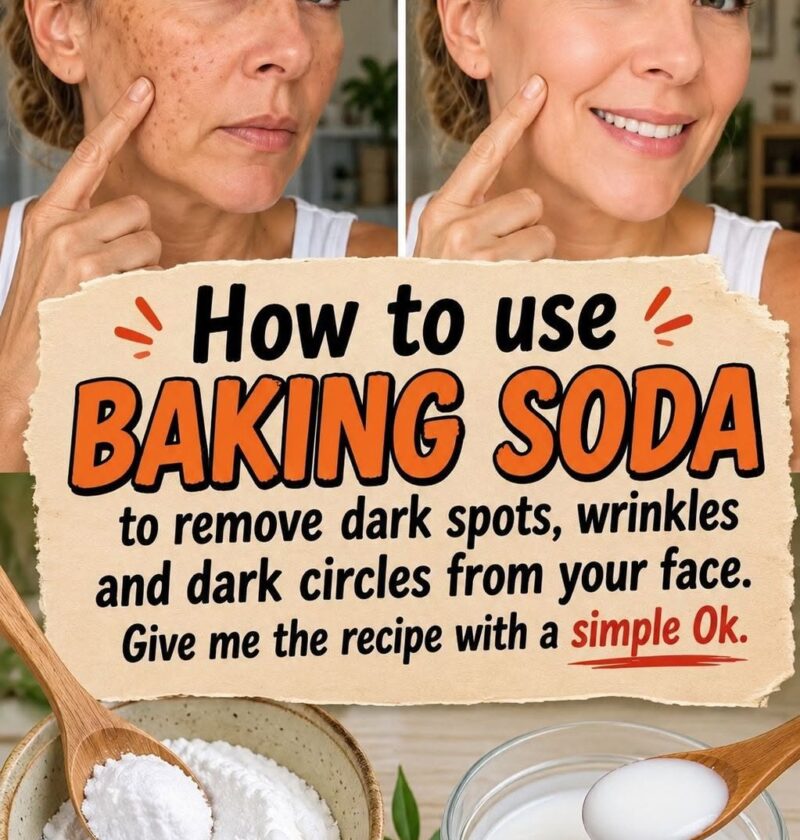
The headline “Baking Soda on the Face: Benefits, Risks, and How to Use It Safely” refers to a popular DIY skincare trend. Baking soda (sodium bicarbonate) is inexpensive and widely available, but it is not a proven treatment for wrinkles, dark spots, acne, or skin ageing, and it should be used cautiously on the face.
Possible benefits of baking soda on skin
Some people use baking soda because it can:
- Gently exfoliate: Its fine particles may remove some surface dead skin cells.
- Reduce odour: It can neutralise smells, which is why it is used in some deodorising products.
- Temporarily smooth skin texture: Exfoliation may make skin feel softer for a short time.
Risks of using baking soda on the face
1. It can disrupt the skin barrier
Healthy skin is naturally slightly acidic. Baking soda is alkaline and may:
- Cause dryness.
- Increase sensitivity.
- Lead to irritation or redness.
2. It may worsen some skin conditions
People with:
- Sensitive skin.
- Eczema.
- Rosacea.
- Acne-prone skin.
may find it irritating.
3. Scrubbing can damage skin
Using baking soda as a rough scrub may create tiny irritations that can make inflammation and uneven skin tone worse.
If someone chooses to try it
To reduce risk:
- Avoid using it as a daily facial scrub.
- Do a small patch test first.
- Do not use it on broken, irritated, or sunburned skin.
- Stop if there is burning, itching, redness, or peeling.
- Moisturise afterward.
Safer alternatives for common concerns
- Dark spots: Sunscreen, vitamin C, niacinamide, azelaic acid, or dermatologist-recommended treatments.
- Fine lines: Sunscreen, moisturisers, and retinoid products (when suitable).
- Acne: Evidence-based ingredients such as salicylic acid or benzoyl peroxide may be more appropriate.
Baking soda can have household uses, but for facial skincare, gentler and better-tested products are usually a safer choice.