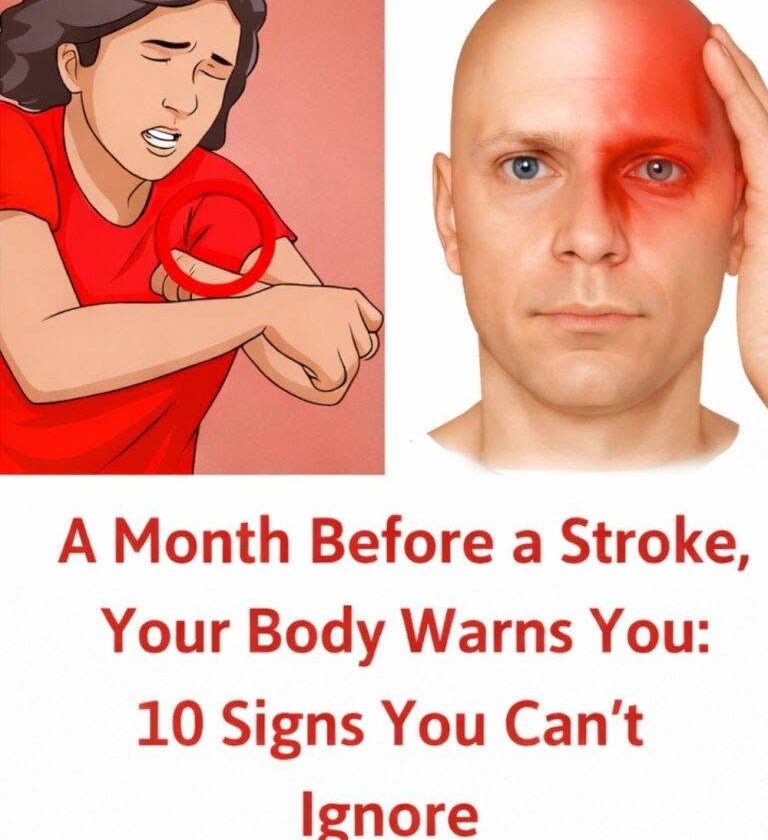
A Month Before a Stroke: 10 Warning Signs You Should Not Ignore
The idea that your body always gives a warning exactly one month before a stroke is not medically accurate. Some strokes happen suddenly without clear warning. However, certain symptoms—especially those caused by a transient ischemic attack (TIA) or other circulation problems—can occur days, weeks, or even longer before a stroke and should be taken seriously.
1. Sudden weakness or numbness
- Weakness, tingling, or loss of feeling in the face, arm, or leg—especially on one side of the body.
2. Facial drooping
- One side of the face may feel weak or appear uneven when smiling.
3. Speech or language changes
- Slurred speech, trouble finding words, or difficulty understanding others.
4. Temporary vision problems
- Sudden blurred vision, double vision, or temporary loss of vision in one or both eyes.
5. Dizziness or balance problems
- Unexplained dizziness, trouble walking, loss of coordination, or feeling unsteady.
6. Sudden confusion
- Difficulty thinking clearly, following conversations, or recognizing familiar situations.
7. Severe or unusual headache
- A sudden, intense headache—especially if different from your usual headaches—can be a warning sign.
8. Brief episodes that come and go
- Symptoms that last minutes and disappear may be a TIA (“mini-stroke”) and should not be ignored.
9. Trouble swallowing
- New difficulty swallowing or a feeling that food or liquids are not moving normally.
10. New unexplained changes in movement or coordination
- Dropping objects, difficulty using one hand, or unusual clumsiness.
Use the FAST stroke warning signs:
- F — Face: Does one side droop?
- A — Arms: Is one arm weak or numb?
- S — Speech: Is speech difficult or unusual?
- T — Time: Call emergency services immediately