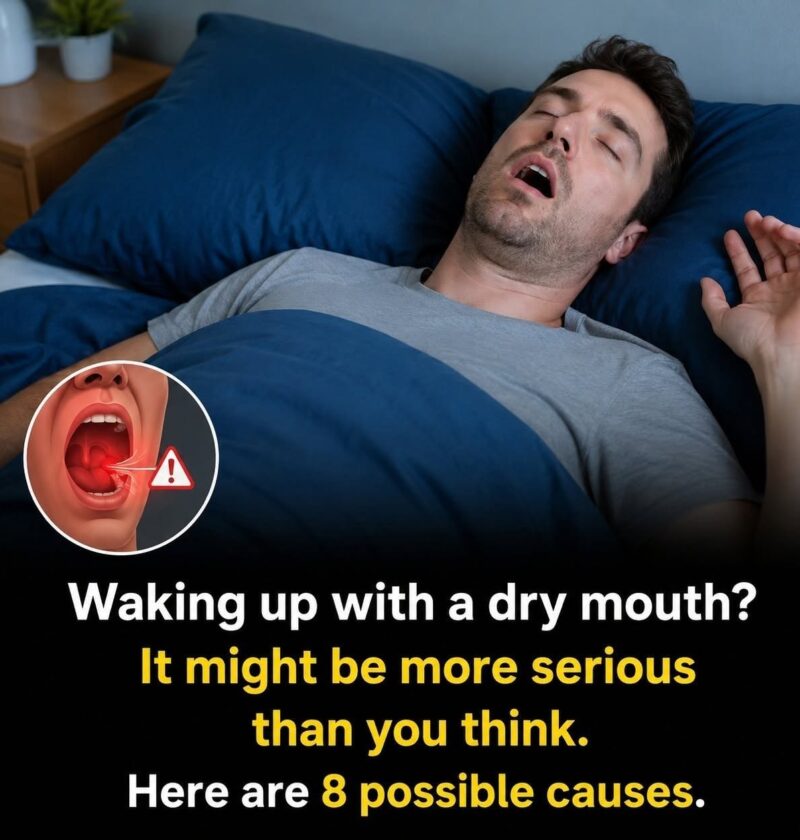
Waking up with a dry mouth at night is common, but it can sometimes be a clue that something is affecting your sleep, breathing, hydration, or oral health.
Possible reasons include:
- Breathing through your mouth while sleeping: Often happens because of nasal congestion, allergies, a deviated septum, or simply a sleeping habit.
- Snoring or sleep apnea: Repeated mouth breathing during sleep can cause a very dry mouth. Sleep apnea may also involve loud snoring, gasping, pauses in breathing, morning headaches, and daytime tiredness.
- Dehydration: Not drinking enough fluids, heavy sweating, alcohol use, or a dry environment can contribute.
- Medications: Many medicines can reduce saliva production, including some allergy medicines, antidepressants, blood pressure medications, and others.
- Dry mouth conditions: Some medical conditions, including diabetes and certain autoimmune disorders, can cause reduced saliva.
- Mouth or dental issues: Low saliva flow increases the risk of cavities, gum problems, and bad breath.
Things that may help:
- Drink enough water during the day.
- Use a humidifier if your bedroom air is dry.
- Address nasal congestion or allergies if present.
- Avoid alcohol close to bedtime.
- Maintain good oral hygiene and consider saliva-moisturizing products if needed.
Consider speaking with a healthcare professional or dentist if dry mouth is persistent, especially if you also have:
- Excessive thirst or frequent urination
- Difficulty swallowing
- Mouth sores
- Tooth decay
- Loud snoring, choking/gasping during sleep, or severe daytime sleepiness
Dry mouth alone is often manageable, but it can sometimes be a sign that your body needs attention to an underlying issue.