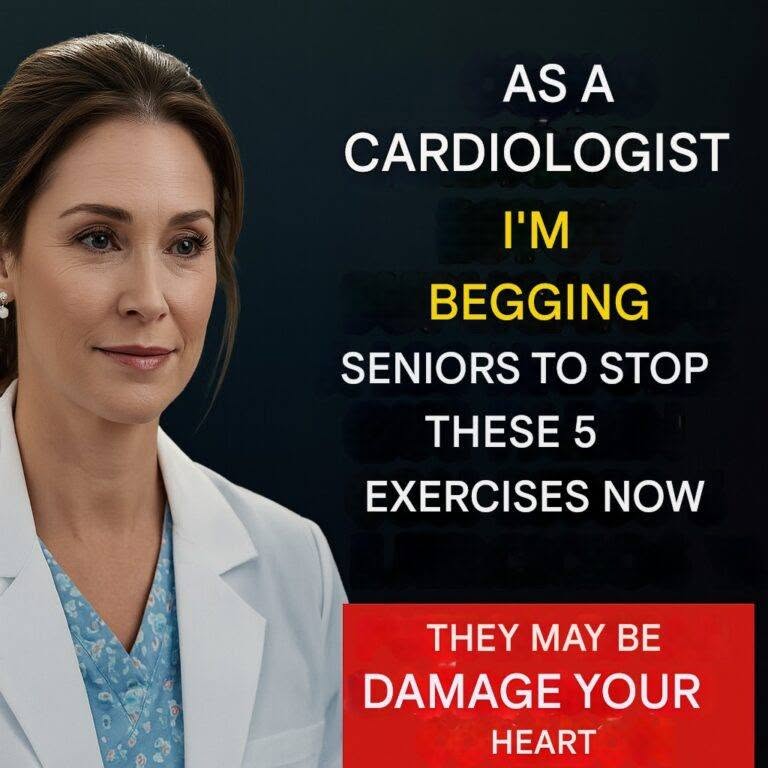
5 Exercises That Could Harm You in Old Age (and Safer Alternatives)
Exercise is one of the best ways to maintain strength, balance, and independence as we age. However, some movements may become risky if they place excessive stress on joints, the spine, or the heart—especially for people with arthritis, osteoporosis, balance problems, or chronic health conditions.
The goal is not to stop exercising, but to choose activities that match your fitness level and health needs.
1. Deep squats with heavy weights
Why they may be risky:
- Put significant stress on knees, hips, and lower back
- Can increase fall risk if balance or leg strength is limited
Safer alternatives:
- Chair squats
- Partial squats while holding support
- Bodyweight sit-to-stands
2. High-impact jumping exercises
Examples:
- Jump squats
- Box jumps
- Repeated jumping routines
Why they may be risky:
- Increase impact on joints
- May be unsafe for people with osteoporosis or joint problems
- Can increase fall risk
Safer alternatives:
- Brisk walking
- Low-impact step-ups
- Swimming or cycling
3. Heavy lifting without proper technique
Why it may be risky:
- Poor form can strain the back and joints
- Holding your breath while lifting can temporarily raise blood pressure
Safer alternatives:
- Use lighter weights with controlled movements
- Focus on proper technique
- Consider guidance from a qualified trainer or physical therapist
4. Sit-ups and repeated spinal flexion exercises
Why they may be risky:
- Repeated bending of the spine may aggravate some back problems
- May be uncomfortable for people with spinal conditions
Safer alternatives:
- Core exercises that stabilize the spine, such as:
- Modified planks
- Bird-dog exercises
- Gentle abdominal bracing
5. Exercises that challenge balance too aggressively
Examples:
- Standing on unstable surfaces
- Complex movements without support
Why they may be risky:
- Falls can cause serious injuries, especially with weaker bones
Safer alternatives:
- Balance exercises near a wall or sturdy chair
- Heel-to-toe walking
- Tai chi
- Supervised balance training
Exercises that are often beneficial for older adults
Many older adults benefit from a combination of:
✅ Walking or other aerobic activity for heart health
✅ Strength training to maintain muscle and bone strength
✅ Flexibility exercises for mobility
✅ Balance training to reduce fall risk