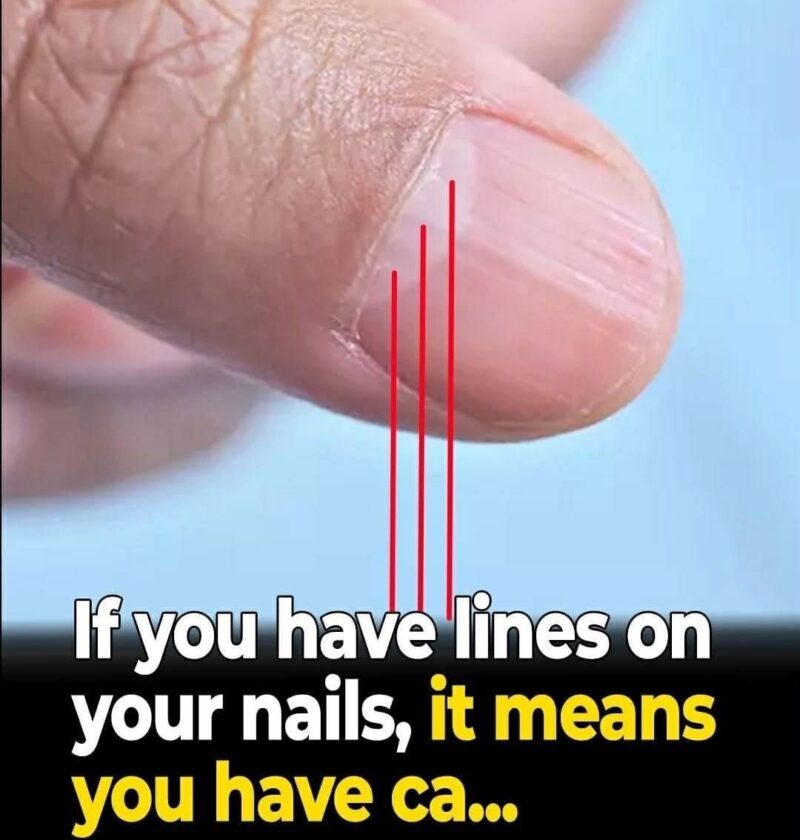
These vertical ridges are very common and, by themselves, do not mean you have cancer.
Here’s what they can mean:
- Normal aging: The most common cause. Vertical ridges tend to become more noticeable as people get older.
- Dry nails or repeated minor trauma: Frequent hand washing, nail biting, or manual work can make ridges more visible.
- Nutritional deficiencies: Occasionally associated with low iron or certain vitamin deficiencies, but ridges alone are not enough to diagnose this.
- Certain skin conditions: Such as eczema or psoriasis, in some cases.
When should you be concerned?
A doctor should evaluate a nail if you notice:
- A new dark brown or black vertical stripe, especially if it’s only on one nail or extends onto the surrounding skin.
- A nail that becomes distorted, separates from the nail bed, or changes shape significantly.
- Clubbing (the fingertips enlarge and the nails curve downward).
- Persistent pain, bleeding, or a growth under the nail.
About the claim in the image
The statement “If you have lines on your nails, it means you have cancer” is false. There is no medical evidence that ordinary vertical ridges predict cancer or life expectancy.
Doctors look at nail changes as one small piece of the overall clinical picture. While some rare nail changes can be associated with certain illnesses, most people with vertical ridges have perfectly healthy nails.
If these ridges have recently appeared, are affecting only one nail, or are accompanied by other symptoms (weight loss, fatigue, persistent cough, swollen fingertips, etc.), it’s reasonable to discuss them with your healthcare provider. Otherwise, vertical ridges like those shown in the image are usually considered a normal finding.