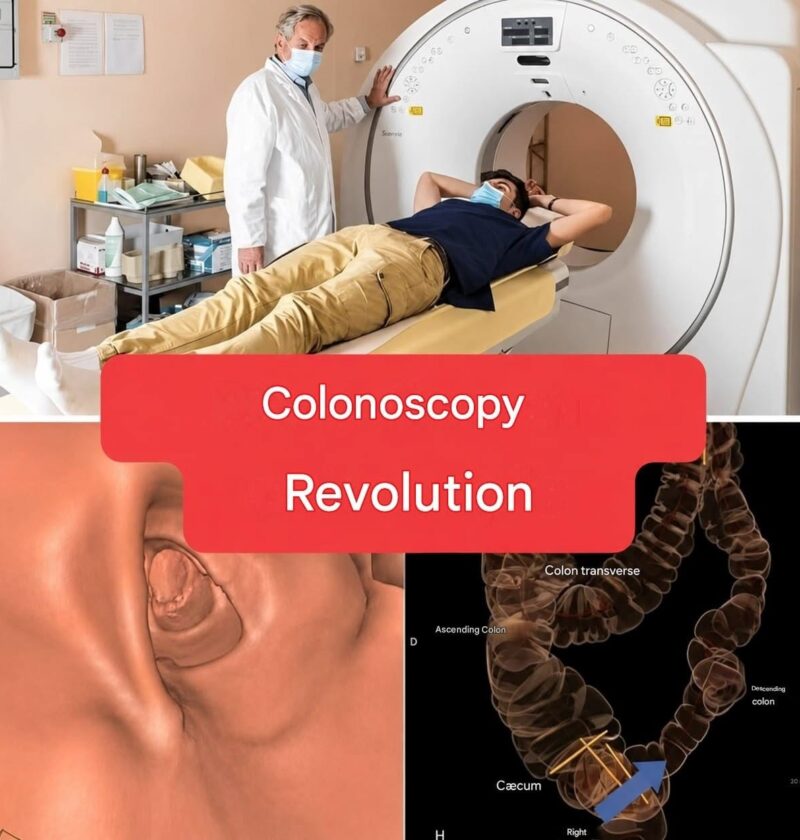
The claim “New method: colonoscopy will no longer be an invasive examination” is an oversimplification. While there are newer, less invasive ways to screen for colorectal cancer, they have not replaced conventional colonoscopy in most situations.
Here are the main alternatives:
- Fecal immunochemical test (FIT): A simple at-home stool test that looks for hidden blood. It is effective for routine screening in people at average risk, but a positive result usually needs follow-up with a colonoscopy.
- Stool DNA tests: These combine testing for blood with DNA markers linked to colorectal cancer. They are non-invasive but also require a colonoscopy if abnormal.
- CT colonography (“virtual colonoscopy”): A CT scan creates images of the colon. It still requires bowel preparation, and if a suspicious polyp is found, a standard colonoscopy is needed to remove it or take a biopsy.
- Capsule colonoscopy: A person swallows a capsule containing a tiny camera. This option is available in some settings for selected patients, but it cannot remove polyps or collect tissue samples.
Why conventional colonoscopy is still important
A standard colonoscopy remains the most comprehensive test because it allows a doctor to:
- View the entire colon directly
- Remove polyps during the same procedure
- Take biopsies of suspicious areas
- Prevent some colorectal cancers by removing precancerous polyps
When are less invasive tests appropriate?
For many adults at average risk of colorectal cancer, non-invasive screening tests are appropriate options. However, if you have:
- A positive stool test
- Symptoms such as rectal bleeding, unexplained anemia, or persistent changes in bowel habits
- A personal or strong family history of colorectal cancer or certain polyps
your healthcare professional may recommend a conventional colonoscopy.
So, while newer screening methods are making colorectal cancer screening easier for many people, they have not made invasive colonoscopy obsolete. They are best viewed as complementary options, with the right test depending on your individual risk and circumstances.