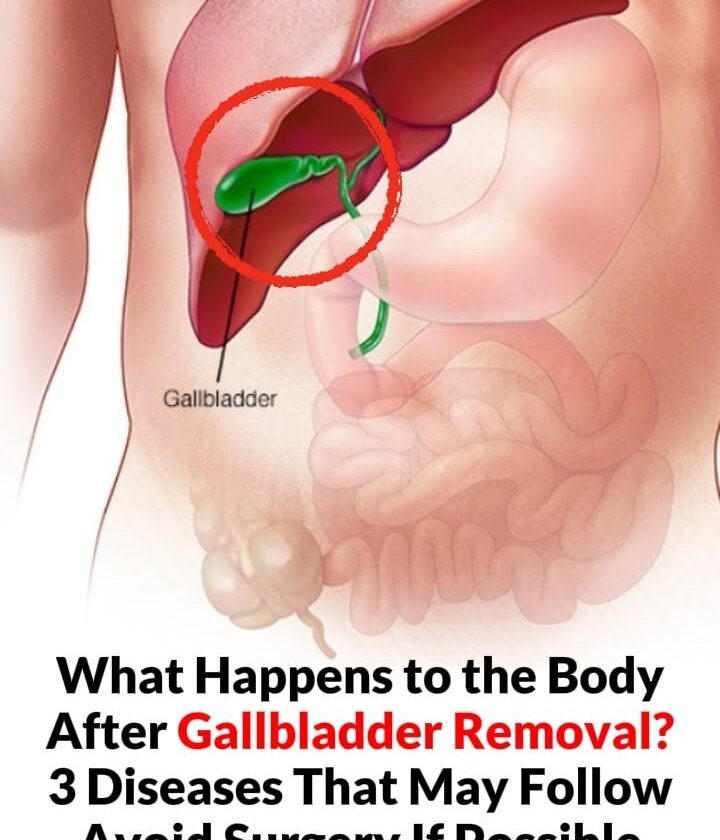
The headline “What Happens to the Body After Gallbladder Removal? 3 Diseases That May Follow – Avoid Surgery If Possible” is misleading. While gallbladder removal (called cholecystectomy) can have side effects and is not necessary for everyone with gallstones, it is often the recommended and effective treatment for people with recurrent symptoms or certain complications.
What happens after gallbladder removal?
The gallbladder stores bile made by the liver. After surgery:
- The liver still produces bile.
- Instead of being stored, bile flows directly into the small intestine.
- Most people digest food normally after they recover.
Possible effects after surgery
Some people experience:
- Diarrhea or loose stools
- Usually temporary and improves within weeks to months.
- A small percentage of people have longer-lasting symptoms.
- Bloating or indigestion
- Fatty meals may be harder to tolerate at first.
- Eating smaller, lower-fat meals during recovery often helps.
- Persistent abdominal symptoms
- Some people continue to have pain or digestive symptoms after surgery, but these are not always caused by the absence of the gallbladder. Other digestive conditions may be responsible.
Does gallbladder removal cause diseases?
There is no evidence that most people develop specific diseases simply because their gallbladder was removed. Research has found associations between gallbladder removal and some digestive conditions in certain groups, but these do not mean the surgery directly causes disease, and the absolute risk for an individual is often small.
Should you avoid surgery?
Not necessarily.
Gallbladder removal is generally recommended when someone has:
- Repeated painful gallstone attacks
- Inflammation or infection of the gallbladder
- Gallstones causing blockage of the bile ducts
- Gallstone-related pancreatitis
If gallstones are present but causing no symptoms, surgery is often not recommended.
When to seek urgent medical care
Seek prompt medical attention if you have:
- Severe pain in the upper right abdomen that doesn’t improve
- Fever or chills with abdominal pain
- Yellowing of the skin or eyes (jaundice)