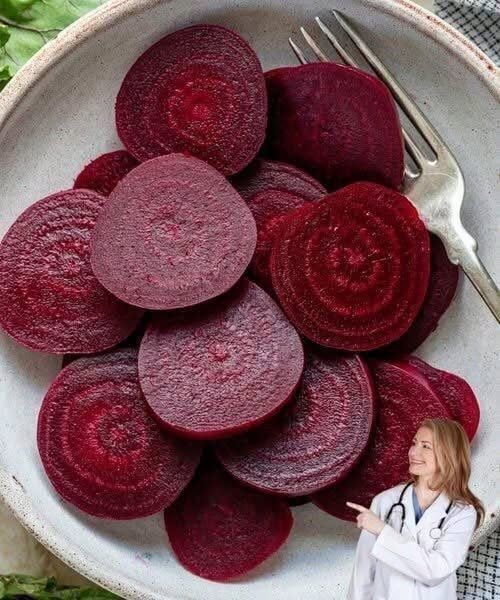
Doctors Reveal What Eating Beets Can CauseBeets (beetroot) are a nutrient-rich vegetable that can have several effects on the body. Many online posts exaggerate their benefits or dangers, but here are the real, evidence-based effects of eating beets.
1. Pink or red urine and stool (beeturia)
- Some people notice their urine or bowel movements turn pink, red, or purple after eating beets.
- This is usually harmless and happens because of beet pigments passing through the body.
- It can sometimes be mistaken for blood, so persistent or unexplained red urine should still be checked by a healthcare professional.
2. Lower blood pressure in some people
- Beets are naturally high in nitrates, which the body can convert into nitric oxide.
- Nitric oxide helps blood vessels relax, which may contribute to modest blood pressure reductions in some people.
3. Improved exercise performance
- Beetroot and beetroot juice are used by some athletes because dietary nitrates may improve how efficiently muscles use oxygen during exercise.
4. Better bowel regularity
- Beets contain fiber, which can support healthy digestion and help prevent constipation.
5. Possible kidney stone concerns for some people
- Beets contain oxalates, natural compounds that can contribute to kidney stone formation in people who are prone to calcium oxalate stones.
- Those with a history of kidney stones may want to discuss dietary choices with a healthcare professional.
6. Blood sugar and calorie effects
- Whole beets contain fiber and nutrients, making them different from sugary drinks or processed foods.
- People with diabetes can often include beets in a balanced diet while monitoring portions and blood glucose as advised.
7. Allergic reactions (rare)
Some people may experience:
- Itching
- Swelling
- Rash
- Digestive discomfort