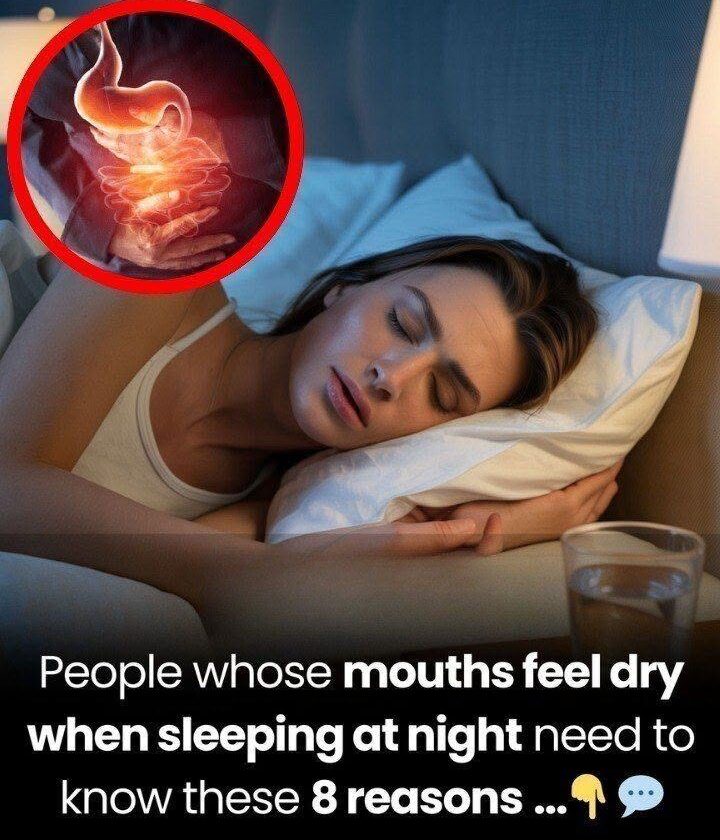
People Whose Mouths Feel Dry When Sleeping at Night Need to Know These 8 Reasons
Waking up with a dry mouth is common, but it can be a sign that something is affecting saliva production, breathing, hydration, or overall health. Occasional dryness is usually harmless, but frequent nighttime dry mouth deserves attention.
1. Breathing through your mouth while sleeping
One of the most common causes is sleeping with your mouth open.
This may happen because of:
- A blocked nose
- Allergies
- Sinus congestion
- Sleep position
- Habitual mouth breathing
When air constantly passes through the mouth, it can dry out saliva and tissues.
2. Dehydration
Not drinking enough fluids during the day can reduce saliva production.
Signs may include:
- Dry mouth on waking
- Dark urine
- Increased thirst
- Dry lips
Avoiding excessive alcohol and maintaining regular fluid intake can help.
3. Snoring or sleep apnea
Snoring often involves mouth breathing, which can cause dryness.
People with sleep apnea may also notice:
- Loud snoring
- Pauses in breathing during sleep
- Morning headaches
- Daytime tiredness
If these symptoms occur, medical evaluation is important.
4. Medications
Many commonly used medicines can reduce saliva production.
Examples include some:
- Allergy medicines (antihistamines)
- Blood pressure medications
- Antidepressants
- Decongestants
- Pain medications
If dry mouth began after starting a medication, discuss it with a healthcare professional before making changes.
5. Sleeping in a dry environment
Dry air from:
- Air conditioners
- Heaters
- Low humidity
can increase moisture loss from the mouth and throat