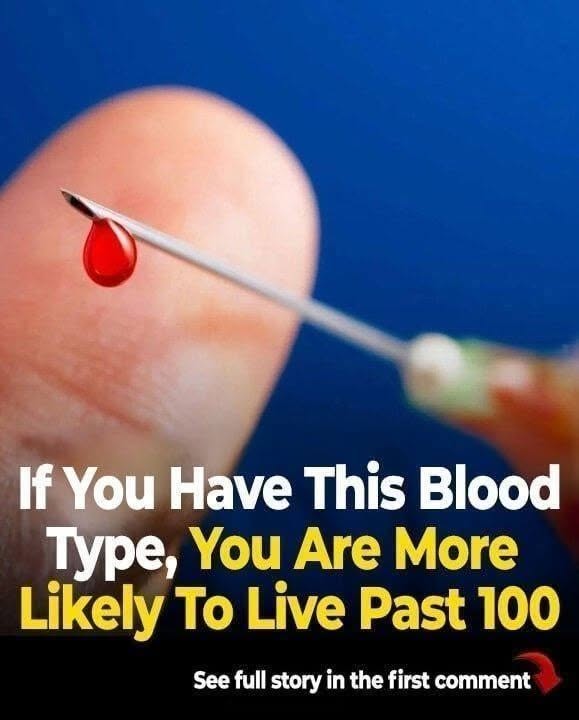
Studies Indicate That Individuals With This Blood Type May Have a Higher Likelihood of Living to 100 — What Science Says
You may have seen claims that one blood type is linked to living longer, especially among people who reach very old ages. Research has explored connections between blood type and longevity, but having a certain blood type does not guarantee a longer life.
Some studies have found that people with blood type O may have certain health advantages compared with some other blood groups, particularly related to cardiovascular risk factors.
Why blood type O is sometimes studied in longevity research
1. Lower risk of some blood-clotting problems
People with blood type O tend to have lower average levels of certain clotting proteins, such as von Willebrand factor and factor VIII. Lower levels may be associated with a reduced risk of some clot-related conditions.
2. Possible heart and blood vessel connections
Some research has found differences in cardiovascular disease risk between blood groups. Since heart and vascular health strongly influence lifespan, researchers have investigated whether blood type may play a small role.
3. Differences in disease susceptibility
Blood groups may influence how the immune system interacts with certain infections and inflammatory processes. These effects are complex and do not determine an individual’s lifespan