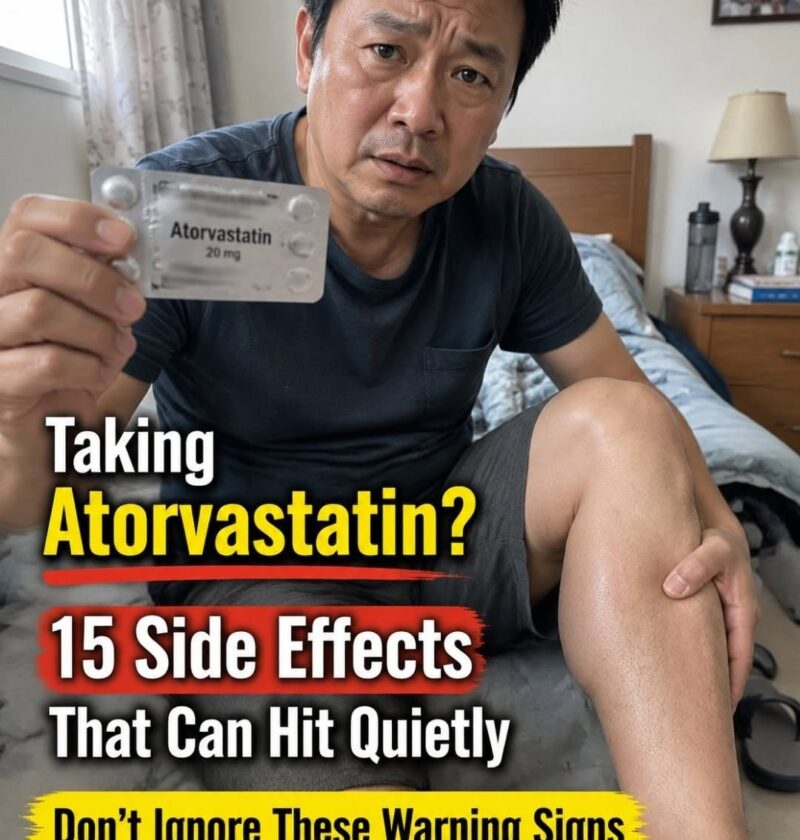
Atorvastatin is a commonly prescribed statin that lowers LDL (“bad”) cholesterol and reduces the risk of heart attack and stroke. Most people tolerate it well, but it can cause side effects—some mild, some that warrant medical attention.
Here are 15 possible side effects that people taking atorvastatin may notice:
- Muscle aches or soreness – One of the most commonly reported side effects.
- Muscle weakness – May make everyday activities feel more difficult.
- Joint pain – Some people experience mild to moderate discomfort.
- Fatigue – Feeling unusually tired or low on energy.
- Headache – Often mild and temporary.
- Upset stomach – Including nausea, indigestion, or abdominal discomfort.
- Diarrhea – Usually mild.
- Constipation – Can occur in some people.
- Difficulty sleeping – Such as insomnia or restless sleep.
- Memory or concentration changes – Rare and generally reversible after stopping the medication, though evidence is mixed.
- Elevated liver enzymes – Usually found on blood tests rather than by symptoms.
- Increased blood sugar – Statins can slightly increase the risk of developing type 2 diabetes in susceptible individuals.
- Rash or itching – An uncommon allergic-type reaction.
- Dark-colored urine – Especially if accompanied by severe muscle pain; this may indicate muscle breakdown.
- Yellowing of the skin or eyes (jaundice) – A rare sign of liver problems.
When to contact your healthcare provider
Contact your doctor promptly if you experience:
- Severe or persistent muscle pain or weakness.
- Dark or cola-colored urine.
- Yellowing of the skin or eyes.
- Severe abdominal pain.
- Signs of an allergic reaction (swelling of the face, lips, tongue, or difficulty breathing—seek emergency care).
Don’t stop atorvastatin on your own
If you think you’re having side effects, don’t stop taking atorvastatin without speaking to the healthcare professional who prescribed it. They may:
- Adjust the dose.
- Check blood tests (such as liver enzymes or creatine kinase if muscle symptoms are significant).
- Switch you to a different statin or another cholesterol-lowering medication if appropriate.
It’s also worth remembering that many symptoms like fatigue, aches, or sleep problems can have causes unrelated to atorvastatin, so it’s important to evaluate them in context