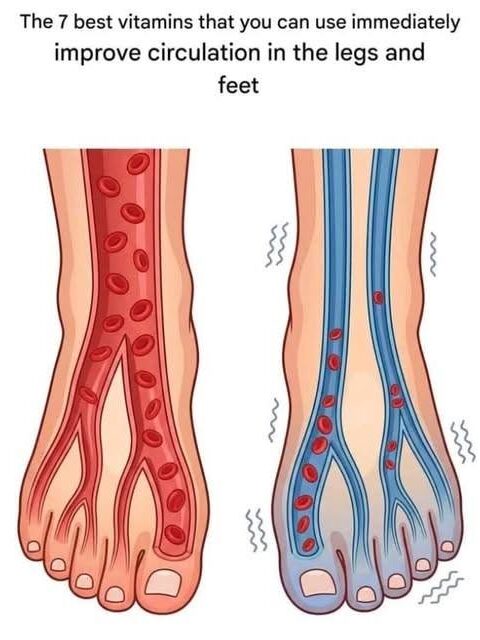
The headline “Seniors: You’ll Be Surprised What This Vitamin Can Do For Leg Circulation And Joint Support” is a common style used in supplement advertising. It often implies that a single vitamin can dramatically improve circulation and joint problems, but the evidence is more nuanced.
Vitamins that may support leg health in older adults
Vitamin D
- Helps maintain bone strength and muscle function.
- Low vitamin D levels are associated with a higher risk of muscle weakness and falls.
- Replacing a deficiency may improve function, but it does not directly “clear blocked arteries” or restore circulation.
Vitamin B12
- Important for healthy nerves and red blood cells.
- A deficiency can contribute to numbness, tingling, balance problems, and weakness.
- Correcting low B12 can help when those symptoms are due to deficiency.
Vitamin C
- Supports collagen production, which is important for connective tissues, including joints and blood vessel walls.
- It does not work as a circulation-enhancing medicine.
What actually helps leg circulation and joint comfort
- Regular walking and gentle strength exercises
- Maintaining a healthy weight
- Managing blood pressure, cholesterol, and diabetes
- Eating a diet rich in vegetables, fruits, legumes, whole grains, and healthy fats
- Treating conditions such as arthritis or peripheral artery disease when present
Be cautious with products claiming that one vitamin can “open arteries,” “remove plaque,” or reverse joint damage—those claims are generally not supported by strong clinical evidence.
If you know the specific vitamin being advertised (for example, vitamin D, B12, K2, or another supplement), I can explain what research says about it.