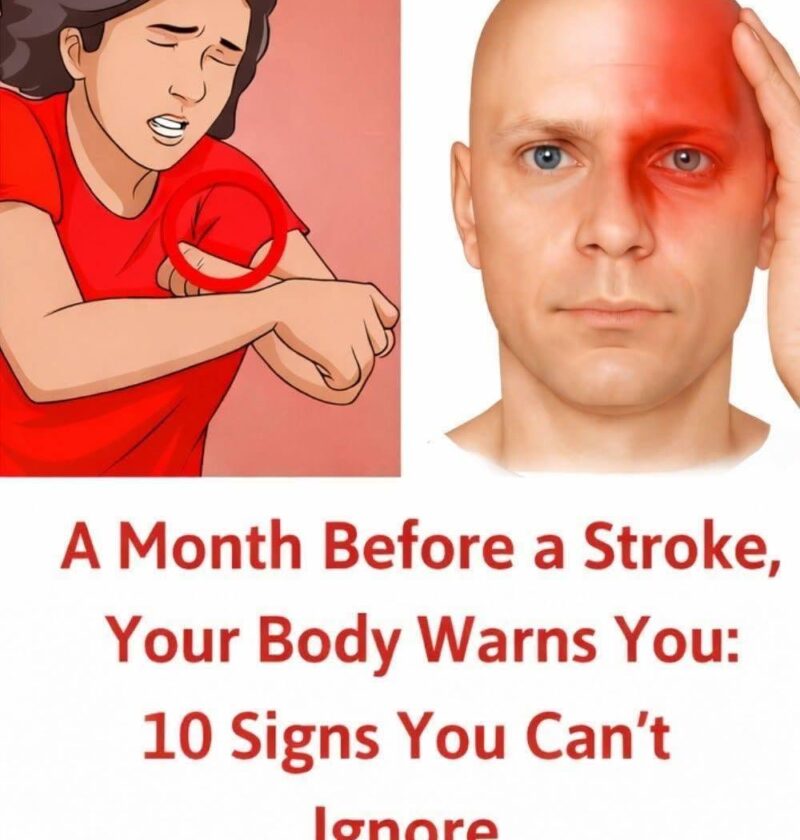
A Month Before a Stroke, Your Body Warns You? What You Should Know
The claim that a stroke always gives warning signs a month in advance is not accurate. Some strokes occur suddenly with no warning. However, some people experience a transient ischemic attack (TIA)—often called a “mini-stroke”—hours, days, or even weeks before a stroke. A TIA is a medical emergency because it can be a warning that a stroke may occur.
Possible Warning Signs
If any of these symptoms occur suddenly, seek emergency medical care immediately—even if they go away.
1. Sudden Weakness or Numbness
Especially on one side of the face, arm, or leg.
2. Face Drooping
One side of the face may droop or feel numb. Ask the person to smile—an uneven smile can be a warning sign.
3. Difficulty Speaking
Speech may become slurred, or the person may have trouble speaking or understanding others.
4. Sudden Vision Changes
Blurred vision, double vision, or loss of vision in one or both eyes.
5. Trouble Walking
Loss of balance, dizziness, or difficulty coordinating movements.
6. Sudden Severe Headache
A sudden, intense headache with no obvious cause, especially if accompanied by other neurological symptoms.
7. Confusion
Sudden confusion or difficulty understanding simple instructions.
8. Difficulty Swallowing
Although less common, sudden trouble swallowing can occur during a stroke.
9. Sudden Loss of Coordination
Difficulty using an arm or leg or performing familiar tasks.
10. A Transient Ischemic Attack (TIA)
Symptoms are similar to a stroke but resolve within minutes or hours. Do not ignore them—a TIA requires urgent medical evaluation because it significantly increases the risk of a future stroke.
Remember the FAST Test
Act FAST if you suspect a stroke:
- F – Face: Ask the person to smile. Does one side droop?
- A – Arms: Ask them to raise both arms. Does one drift downward?
- S – Speech: Is speech slurred or strange?
- T – Time: Call your local emergency services immediately.