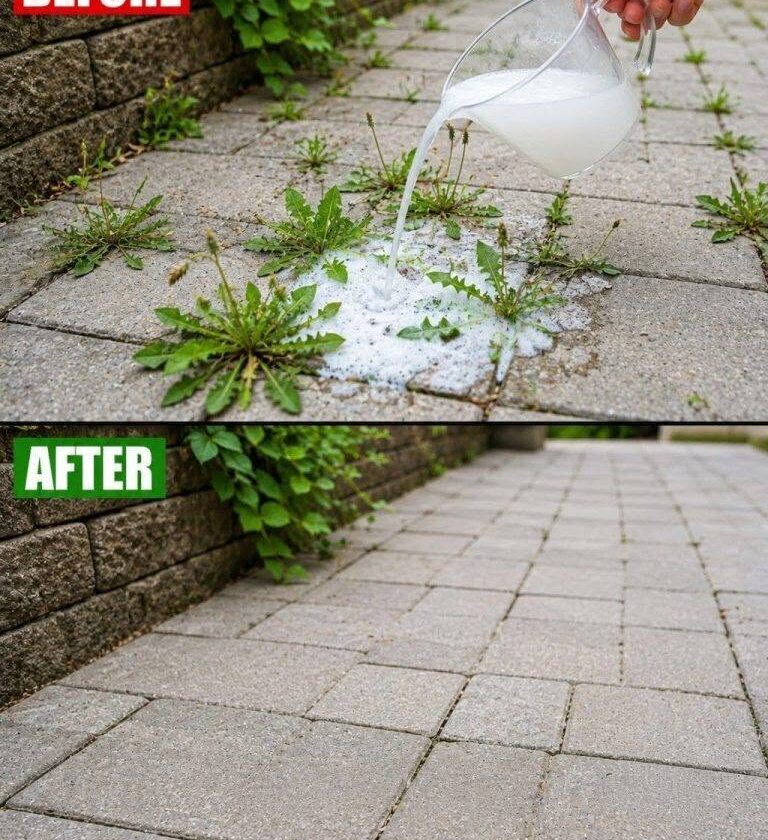
Natural and Powerful Homemade Weed Control: What Works and What to Avoid
Many gardeners look for homemade weed killers as alternatives to commercial herbicides. Some household ingredients can help control small weeds, but results vary, and some mixtures can harm soil, nearby plants, and beneficial organisms.
1. Vinegar-based weed spray (for small weeds)
Common recipe:
- 1 liter of household vinegar (higher-strength horticultural vinegar works better than kitchen vinegar)
- A few drops of dish soap (helps the liquid stick to leaves)
How to use:
- Spray directly on weed leaves on a dry, sunny day.
- Avoid spraying desirable plants.
Important: Vinegar mainly damages the leaves. Many deep-rooted weeds may grow back because the roots remain alive.
2. Hand removal with better technique
For long-lasting control:
- Pull weeds after rain or watering when soil is softer.
- Remove as much of the root as possible.
- Use a hand tool for deep-rooted weeds.
This is often one of the most effective natural methods.
3. Mulching to prevent new weeds
A thick layer of mulch can block sunlight and reduce weed growth.
Options include:
- Wood chips
- Straw
- Compost
- Leaves
Mulch also helps retain moisture and improve soil health.
4. Boiling water for cracks and paths
Pouring boiling water on weeds growing in:
- Driveway cracks
- Sidewalk gaps
- Patios
can kill the plant tissue.
Use caution: It can also damage nearby plants and can cause burns