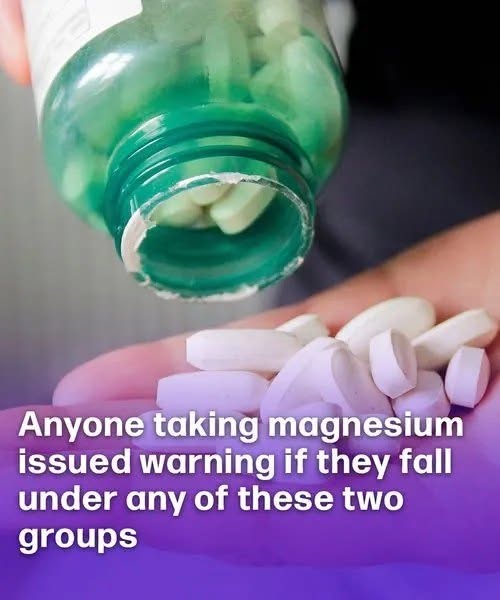
The headline “Health Experts Issue New Warning About Magnesium Supplements — Especially for These Two High-Risk Groups” refers to an important point: magnesium supplements can be helpful for some people, but they are not risk-free for everyone.
Magnesium is a mineral involved in muscle function, nerve signaling, heart rhythm, and bone health. Many people get enough magnesium from food, but supplements are sometimes used when intake is low or for specific medical reasons.
Two groups that should be especially careful with magnesium supplements:
1. People with kidney disease
- The kidneys remove excess magnesium from the body.
- If kidney function is reduced, magnesium can build up and lead to high magnesium levels (hypermagnesemia).
- Possible symptoms include:
- Weakness
- Nausea
- Low blood pressure
- Confusion
- Slow heartbeat in severe cases
2. People taking certain medications
Magnesium can interact with some medicines by reducing absorption or affecting how they work, including:
- Some antibiotics
- Thyroid hormone replacement (such as levothyroxine)
- Some osteoporosis medicines (bisphosphonates)
- Certain medications that affect heart rhythm or blood pressure
Other things to know:
- High doses of magnesium supplements commonly cause diarrhea, stomach cramps, or nausea.
- Magnesium from food (such as nuts, seeds, beans, whole grains, and leafy greens) is generally not a concern for healthy people because the body regulates absorption.
- The right supplement dose depends on your health, diet, and reason for taking