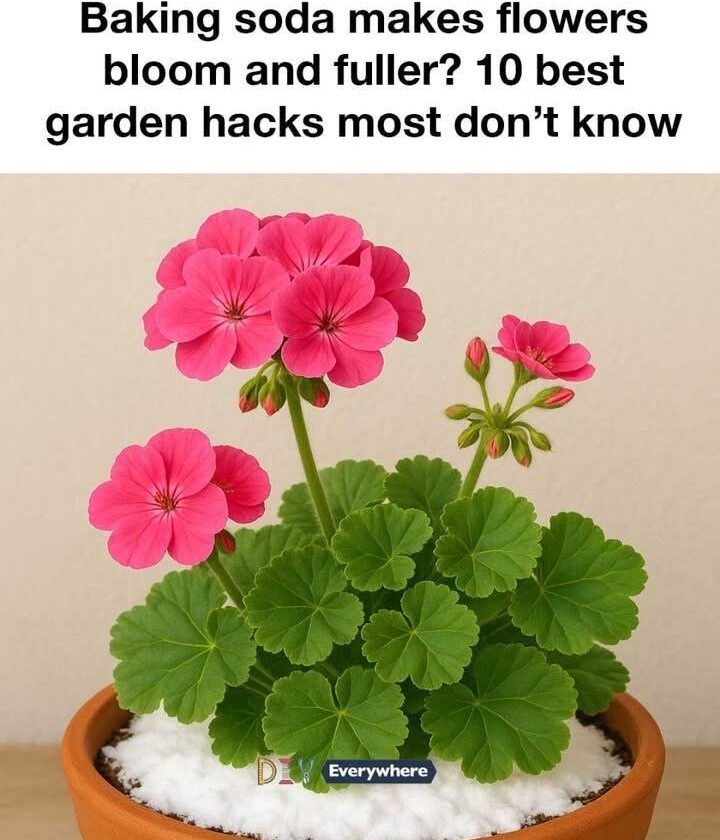
The claim that “baking soda makes flowers bloom bigger and fuller” is popular in gardening videos, but it’s not a magic fertilizer. Baking soda (sodium bicarbonate) does not provide the nutrients plants need for growth, such as nitrogen, phosphorus, or potassium.
That said, baking soda can be useful in a few limited garden situations:
1. Helps with some fungal problems (when used correctly)
A diluted baking soda spray may help reduce certain fungal diseases, such as powdery mildew, by making the leaf surface less favorable for fungal growth.
Simple spray:
- 1 teaspoon baking soda
- 1 quart (about 1 liter) water
- A few drops of mild liquid soap
Spray lightly on affected leaves and avoid applying in strong sunlight or extreme heat.
2. May affect soil pH
Baking soda is alkaline and can raise soil pH slightly. Some plants prefer less acidic soil, but adding too much can damage plants and disrupt nutrient availability.
3. Cleaning garden tools
A baking soda paste can help scrub dirt and residue from tools.
10 practical garden tips that actually help flowers thrive
- Use compost
- Adds organic matter and improves soil health.
- Feed plants appropriately
- Use a fertilizer suited to the plant’s needs.
- Water deeply, not just frequently
- Encourages stronger roots.
- Mulch around plants
- Helps retain moisture and regulate soil temperature.
- Remove spent blooms
- Deadheading can encourage many flowering plants to produce more flowers.
- Give plants the right sunlight
- Many flowering plants need 6+ hours of sun, but requirements vary.