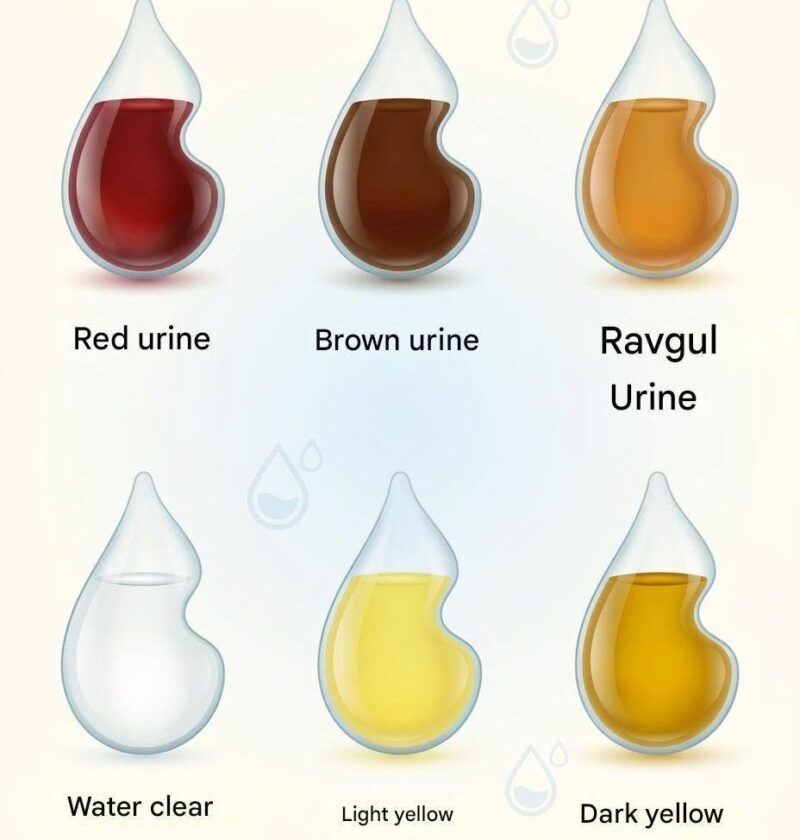
What Does the Color of Your Urine Say About Your Health? 🚽
Urine color can provide clues about hydration, diet, medications, and sometimes health conditions. A change in color is not always a sign of illness, but unusual or persistent changes are worth paying attention to.
💧 Clear or very pale yellow
Often means: You are well hydrated.
Possible issue: If urine is completely clear all the time, it may mean you are drinking more fluid than your body needs.
🌼 Light yellow (often considered normal)
Usually means: Normal hydration and typical urine concentration.
🟡 Dark yellow or amber
Often means: You may be dehydrated.
Try: Drinking more water and checking whether the color becomes lighter.
🟠 Orange urine
Possible causes:
- Dehydration
- Certain medications
- Some vitamins (especially high-dose B vitamins)
- Less commonly, liver or bile-related problems
Seek medical advice if orange urine is persistent or accompanied by yellowing of the skin or eyes.
🩷 Pink or red urine
Possible causes:
- Blood in the urine
- Beets or certain foods
- Some medications
Because blood can be a sign of urinary tract problems, kidney stones, or other conditions, red or pink urine that cannot be explained by food or medication should be checked by a healthcare professional.
🟤 Brown or tea-colored urine
Possible causes:
- Severe dehydration
- Certain medications or foods
- Liver or muscle-related problems
Seek medical advice if it persists or comes with weakness, abdominal pain, or yellowing of the eyes/skin.
🟢 Blue or green urine
Possible causes:
- Certain dyes or foods
- Some medications
- Rarely, infections or other medical conditions
☁️ Cloudy or milky urine
Possible causes:
- Dehydration
- Urinary tract infection (UTI)
- Crystals or other substances in urine
If accompanied by burning, pain, fever, or frequent urination, it should be evaluated.
Other urine clues to notice
Pay attention to:
- Strong, unusual odor (especially with burning or pain)
- Foam that persists (can sometimes be associated with protein in urine)
- Changes in how often you urinate
- Pain or difficulty urinating
When to contact a healthcare professional
Get medical advice if you notice:
- Blood in your urine
- Persistent unusual color without an obvious cause
- Pain in your side or back
- Fever
- Yellow skin or eyes
- A major change in urination patterns