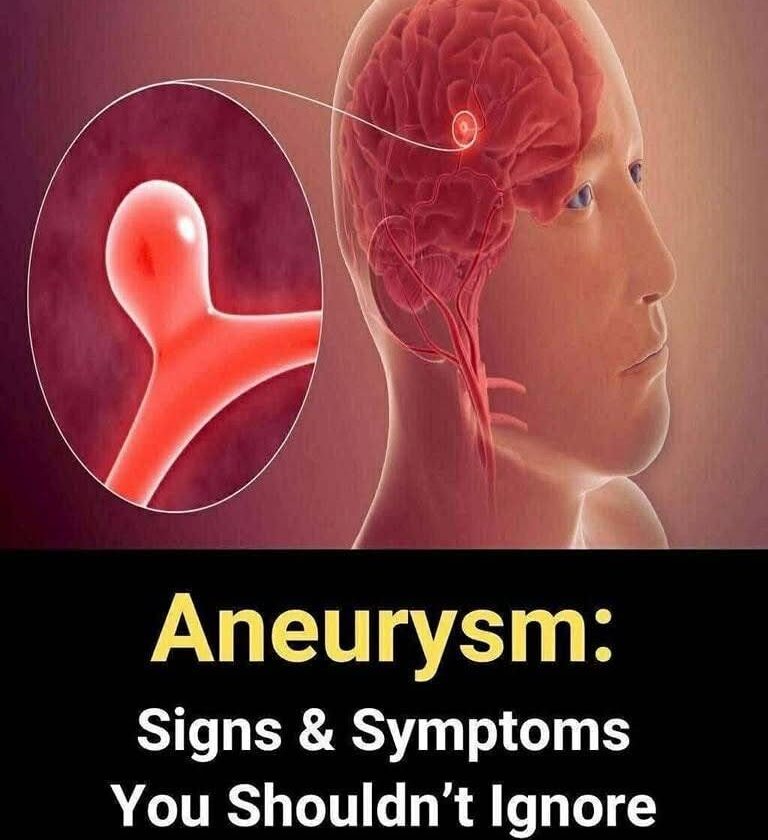
Aneurysm: Signs You Shouldn’t Ignore 🚨
An aneurysm is a weakened area in the wall of a blood vessel that bulges outward. Many aneurysms cause no symptoms and are discovered during imaging for another reason. However, if an aneurysm grows, leaks, or ruptures, it can become a medical emergency.
Warning signs depend on where the aneurysm is located.
🧠 Brain aneurysm (cerebral aneurysm) warning signs
A small, unruptured brain aneurysm may have no symptoms, but possible signs include:
- Sudden or unusual severe headaches
- Pain above or behind an eye
- Blurred or double vision
- Drooping eyelid
- Difficulty speaking
- Weakness or numbness on one side of the body
- Seizures
Emergency warning sign:
A sudden “worst headache of your life”—especially if it is explosive in onset—can be a sign of a ruptured aneurysm and requires immediate emergency care.
❤️ Aortic aneurysm warning signs
The aorta is the body’s largest artery. Symptoms can include:
- Sudden, severe chest or upper back pain
- A tearing or ripping sensation in the chest or back
- Shortness of breath
- Trouble swallowing
- Hoarseness
- A pulsating feeling in the abdomen (sometimes with an abdominal aortic aneurysm)
A ruptured aortic aneurysm can cause:
- Sudden intense pain
- Dizziness or fainting
- Rapid heartbeat
- Low blood pressure
- Shock
This is an emergency.
Who may be at higher risk?
Risk can be higher with:
- High blood pressure
- Smoking history
- Older age
- Family history of aneurysms
- Certain inherited conditions affecting connective tissue
- Atherosclerosis (hardening of the arteries)
When to seek urgent help
Call emergency services immediately for:
- Sudden severe headache
- Sudden chest, back, or abdominal pain
- Fainting or collapse
- New neurological symptoms (weakness, confusion, speech trouble, vision changes)