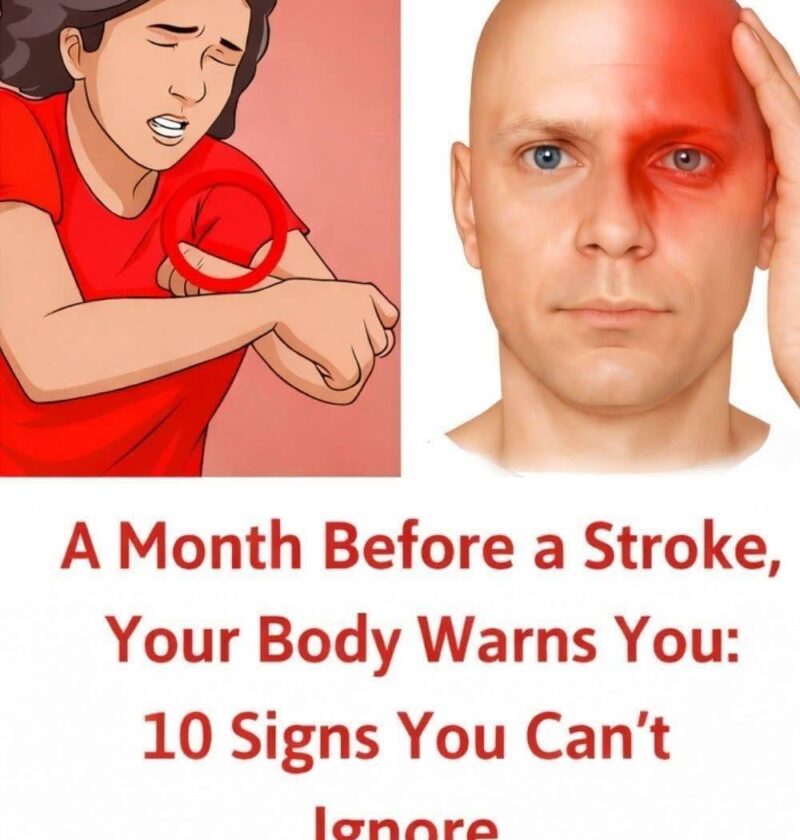
“A Month Before a Stroke, Your Body Warns You: 10 Signs Not to Ignore” — What’s the Truth?
This headline is attention-grabbing, but it can be misleading. There is no reliable set of symptoms that appears exactly one month before every stroke. Many strokes happen suddenly, without warning. However, some people do experience warning signs, especially from a transient ischemic attack (TIA)—sometimes called a “mini-stroke”—which can happen before a major stroke.
A TIA is a medical warning and requires urgent evaluation, even if symptoms disappear.
Possible warning signs that should never be ignored
1. 🙂 Sudden face drooping
- One side of the face becomes weak or numb.
- Smile may look uneven.
2. 💪 Sudden weakness or numbness
- Especially in the face, arm, or leg on one side of the body.
3. 🗣️ Trouble speaking or understanding speech
- Slurred words
- Difficulty finding words
- Confusion during conversation
4. 👁️ Sudden vision changes
- Blurred vision
- Loss of vision in one eye or both eyes
- Double vision
5. 🚶 Sudden balance or coordination problems
- Dizziness
- Trouble walking
- Loss of coordination
6. 🤕 Sudden severe headache
- A very intense headache that is unusual for you, especially with other symptoms, needs urgent attention.
7. 😵 Episodes of confusion
- Sudden difficulty understanding surroundings or instructions.
8. 💤 Unusual fatigue or weakness
- Persistent tiredness alone is usually not a stroke sign, but sudden unexplained weakness can be concerning when combined with other symptoms.
9. 🩺 Repeated episodes of brief neurological symptoms
- Symptoms that appear and then disappear may indicate a TIA.
10. ❤️ Signs linked to stroke risk
These don’t mean a stroke is coming, but they increase risk:
- Uncontrolled high blood pressure
- Smoking
- Diabetes
- High cholesterol
- Irregular heartbeat (such as atrial fibrillation)
Remember BE FAST:
- B — Balance problems
- E — Eye/vision changes
- F — Face drooping
- A — Arm weakness
- S — Speech difficulty
- T — Time to call emergency services