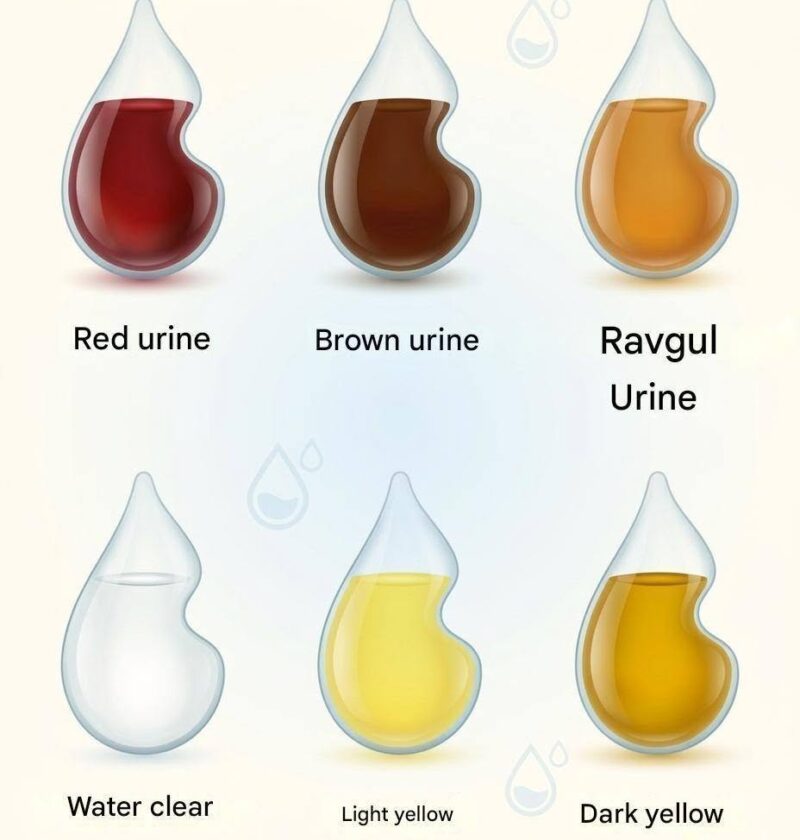
Urine color can give general clues about hydration and some health conditions, but it is not a diagnosis by itself. Here’s what common colors may mean:
| Urine color | Possible meaning |
|---|---|
| Pale yellow / straw color | Usually a sign of good hydration |
| Dark yellow / amber | Often means you may need more fluids; can happen after sweating or not drinking enough water |
| Very clear (almost colorless) | May mean you are drinking more water than needed (especially if constant) |
| Orange | Can be caused by dehydration, some medicines, or certain foods; sometimes needs medical advice if persistent |
| Pink / red | May be from beets or some foods, but can also indicate blood in urine and should be checked if unexplained |
| Brown / tea-colored | Can be due to severe dehydration, certain medicines, liver or muscle-related issues; seek advice if it persists |
| Blue / green | Rare; may come from dyes, medications, or certain infections |
| Cloudy / milky | Can be related to infection, crystals, or other causes, especially with pain or burning |
See a healthcare professional if you notice:
- Blood in urine (red/pink urine without an obvious food cause)
- Persistent dark brown urine
- Cloudy urine with burning, fever, or lower abdominal pain
- A strong unusual smell with other symptoms
- Yellowing of the skin or eyes along with dark urine
A useful everyday check: pale yellow urine is generally a good hydration target, though urine naturally varies throughout the day.