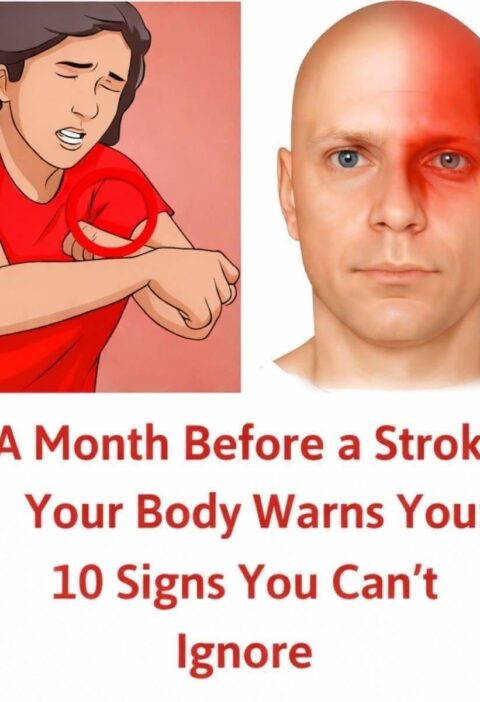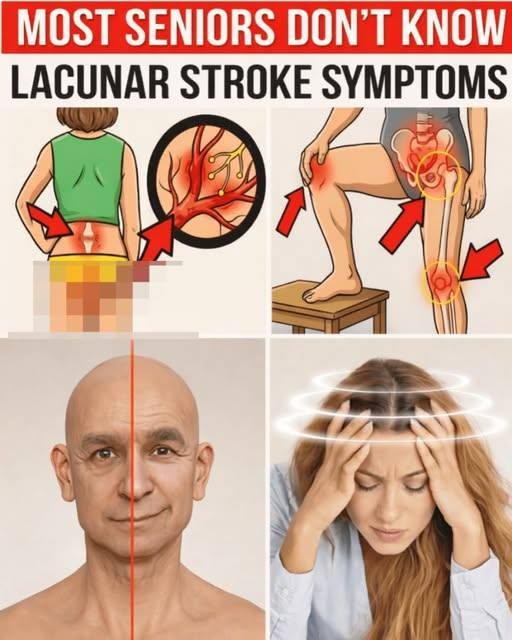
Here’s a detailed, medically safer version of the topic. One important correction: lacunar strokes do not have a unique set of “warning signs” that reliably predict them in advance. They are usually sudden ischemic strokes affecting small, deep brain arteries, and their symptoms can be relatively subtle.
7 Lacunar Stroke Signs in People Over 60 That Are Easy to Overlook
A lacunar stroke can sometimes look less dramatic than a large stroke. That can lead someone to dismiss a new weakness, clumsiness, or speech change as “just getting older.” But sudden neurological changes are not a normal part of aging and should be treated as an emergency.
1. Sudden weakness on one side
One of the classic presentations is weakness affecting the face, arm, leg, or a combination on one side.
It might be surprisingly mild—for example, suddenly struggling to grip a cup, button a shirt, lift one foot, or climb stairs. Lacunar strokes commonly produce motor symptoms because they can affect deep pathways carrying movement signals.
Don’t assume it’s arthritis or fatigue if the change is sudden.
2. New numbness or altered sensation
A person may suddenly notice that one side feels different—perhaps the hand, arm, leg, or face feels numb, tingling, heavy, or strangely insensitive.
Sometimes there is little or no pain, which makes the symptom easier to dismiss.
Sudden one-sided numbness is a recognized stroke symptom and warrants immediate emergency assessment.
3. Unexpected clumsiness or difficulty walking
A person may suddenly become unusually unsteady or have difficulty coordinating an arm or leg.
Examples include:
- Suddenly veering while walking
- Having trouble placing one foot properly
- Dropping objects repeatedly
- Difficulty performing a familiar movement
- Developing new coordination problems
Balance problems can have many causes, but sudden balance or coordination loss is a stroke warning sign.
4. Sudden slurred or “thick” speech
This is one that can easily be overlooked.
Someone may know exactly what they want to say but suddenly sound slurred, slow, or difficult to understand. With certain lacunar syndromes, weakness or incoordination of the muscles involved in speech can produce dysarthria.
It can be mistaken for tiredness, medication effects, or simply “speaking differently.”
A sudden change in speech should never be ignored. Speech difficulty is one of the American Stroke Association’s core B.E. F.A.S.T. warning signs.
5. A suddenly awkward hand
Sometimes the first noticeable problem is remarkably specific: one hand suddenly doesn’t work normally.
A person might:
- Drop a spoon or phone
- Struggle to button clothing
- Have difficulty writing
- Suddenly lose grip strength
- Be unable to perform a familiar fine-motor task
This can appear minor, but new, sudden one-sided weakness or loss of coordination can be a stroke symptom.
6. A new facial asymmetry
Ask the person to smile.
If one side of the face suddenly droops or feels numb, that’s an important warning sign. Facial weakness can occur with lacunar as well as other types of stroke, so the symptom itself cannot determine the stroke subtype.
7. Symptoms that disappear
This may be the most dangerous one to dismiss.
A person may suddenly develop weakness, numbness, speech difficulty, balance problems, or another neurological symptom and then appear completely normal a short time later.
That can happen with a TIA (transient ischemic attack). A TIA is a temporary interruption of blood flow to the brain and is a warning that a more serious stroke may follow. Importantly, you cannot reliably distinguish a TIA from a completed stroke at home