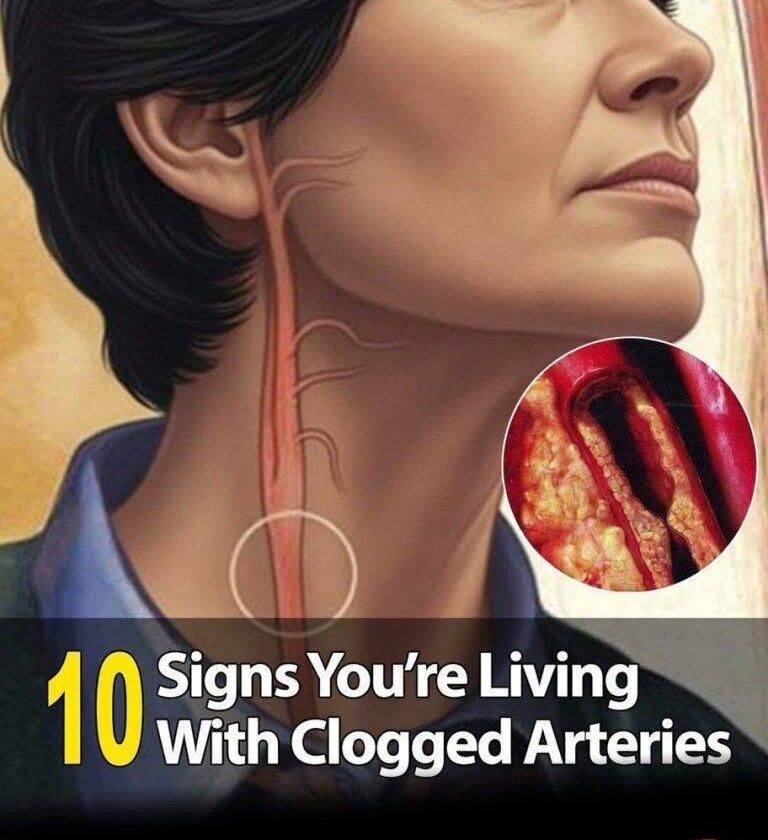
10 Indicators of Blocked Arteries You Shouldn’t Ignore
“Blocked arteries” can occur in different parts of the body. Plaque buildup can narrow arteries supplying the heart, brain, legs, or other organs. Importantly, some people have significant artery disease with few or no symptoms, so symptoms alone cannot rule it out.
1. Leg pain when walking
Pain, aching, heaviness, or cramping in the calf, thigh, buttock, or foot that starts with walking or climbing stairs and improves with rest is a classic symptom of peripheral artery disease (PAD).
2. Unexplained leg or foot weakness
Reduced blood flow can cause weakness, numbness, or difficulty walking. It may initially be mistaken for normal aging or another leg problem.
3. One foot feels unusually cold
A foot or lower leg that is consistently colder than the other can be a sign of reduced arterial blood flow.
4. Changes in skin color
Poor circulation can cause the skin of a foot or leg to become unusually pale, bluish, or discolored.
5. Wounds that heal slowly
A sore on the toe, foot, or leg that takes an unusually long time to heal—or doesn’t heal—can indicate inadequate blood supply.
6. Reduced hair or toenail growth
Slower-growing toenails or reduced hair growth on the legs can occur when blood flow to the lower limbs is impaired. These signs aren’t diagnostic on their own but can occur with PAD.
7. Pain in the legs or feet while resting
Pain that occurs even when you’re resting, particularly in the foot or leg, can indicate more severe arterial disease and warrants medical evaluation.
8. Erectile dysfunction
In some men, erectile dysfunction can be an early indicator of vascular disease because healthy erections require adequate blood flow.
9. Chest pressure or discomfort with exertion
Narrowed coronary arteries can reduce blood flow to the heart muscle. Chest pressure, squeezing, tightness, or discomfort during physical activity can be a warning sign of coronary artery disease and should be medically evaluated.
10. Sudden neurological symptoms
If arteries supplying the brain become blocked, symptoms can include sudden weakness or numbness on one side, difficulty speaking, vision problems, or loss of balance. These can indicate a stroke or TIA and require emergency attention