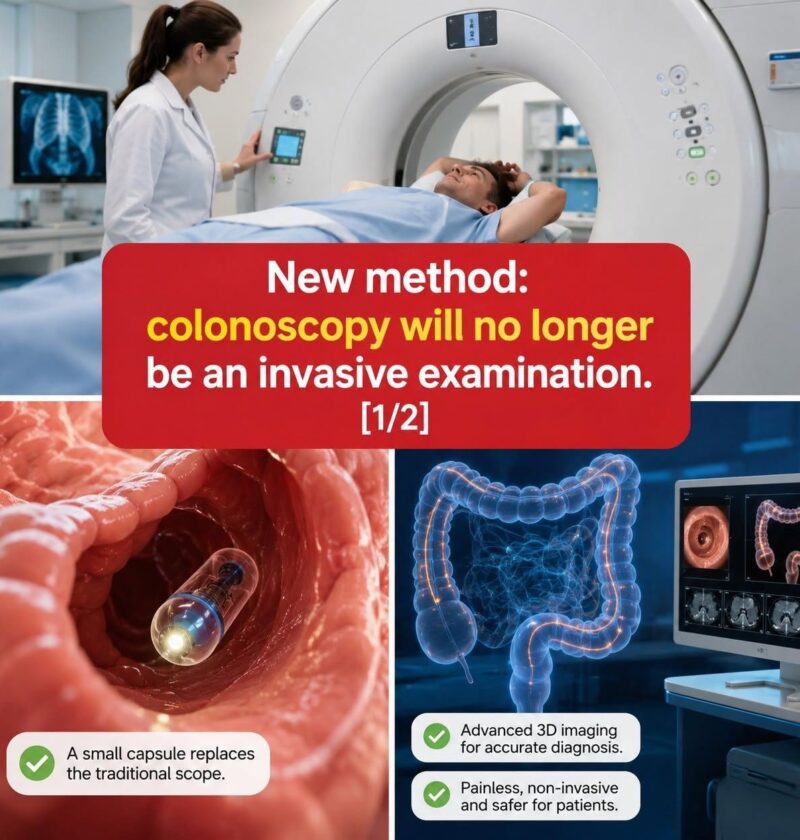
A Colorectal cancer colonoscopy is still considered an invasive medical procedure, and there is currently no new “method” that makes it non-invasive in the way viral posts suggest.
What a colonoscopy actually is
A traditional colonoscopy involves:
- Inserting a flexible tube with a camera (colonoscope) into the rectum
- Gently guiding it through the colon
- Directly inspecting the bowel lining
- Sometimes removing polyps or taking biopsies
Because it physically enters the body, it remains an invasive diagnostic and treatment procedure.
What might be behind the confusion
There are a few modern alternatives people often mix up with “new non-invasive colonoscopy”:
1. CT colonography (“virtual colonoscopy”)
- Uses a CT scan to create images of the colon
- No camera inserted into the body
- Still requires bowel preparation
- Cannot remove polyps during the scan (if found, a real colonoscopy is still needed)
2. Stool-based tests (FIT, DNA tests)
- Check for hidden blood or abnormal DNA in stool
- Completely non-invasive
- Used for screening, not direct examination
3. Capsule endoscopy
- Swallowable camera pill
- Less invasive, but still inside the digestive tract
- Not a full replacement for colonoscopy in most cases
The key reality
Even with newer technologies:
- No current method fully replaces colonoscopy for diagnosis + treatment in one step
- If abnormalities are suspected, a traditional colonoscopy is still usually required
Bottom line
The idea that “colonoscopy is no longer invasive” is false or heavily exaggerated. What is true is that medicine now offers less invasive screening options, but they are not full replacements.
If you want, I can break down which screening method is best for different ages and risk levels—that’s where things actually get interesting.