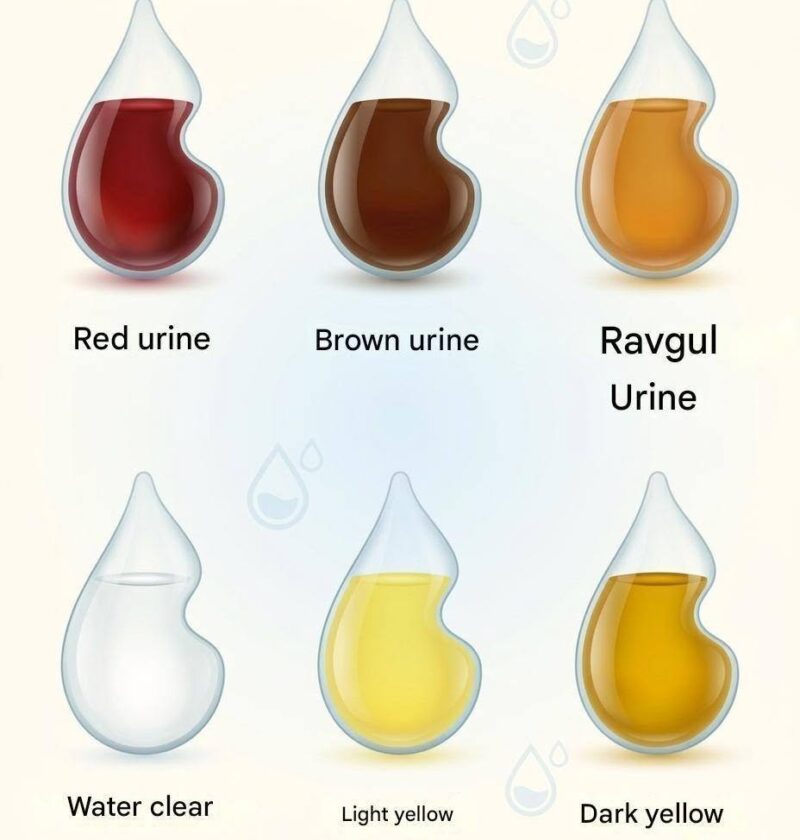
What Does the Colour of Your Urine Say About Your Health?
Urine colour can give clues about hydration levels and certain health conditions, but it is not a perfect diagnostic tool. Foods, vitamins, medicines, and some medical conditions can all change urine colour.
Clear or Very Pale Yellow
✅ Usually normal
Very pale urine often means you are well hydrated. However, if your urine is consistently completely clear and you are drinking excessive amounts of water, you may be overhydrating.
Light Yellow to Straw-Coloured
✅ Often considered the ideal range
This usually suggests a healthy level of hydration.
Dark Yellow or Amber
⚠️ Often a sign of dehydration
You may need more fluids, especially if you have also noticed:
- Thirst
- Dry mouth
- Headache
- Fatigue
- Dizziness
Orange Urine
Possible causes include:
- Dehydration
- Certain medicines (including some urinary tract medications)
- Some vitamins or supplements
- Liver or bile duct problems (especially if accompanied by yellowing of the skin or eyes)
Pink or Red Urine
Possible causes include:
- Blood in the urine
- Beetroot or foods with strong pigments
- Certain medicines
Blood in urine should generally be checked by a healthcare professional, especially if it occurs without an obvious food or medication explanation.
Brown or Tea-Coloured Urine
Possible causes include:
- Severe dehydration
- Certain medicines
- Liver problems
- Muscle injury causing release of muscle proteins
Seek medical advice if it persists or occurs with other symptoms.
Blue or Green Urine
This is uncommon and may be caused by:
- Certain medications or dyes
- Food colouring
- Some infections (rare)
If there is no obvious explanation, it is worth getting medical advice.
Cloudy or Milky Urine
Possible causes include:
- Dehydration
- Urinary tract infection (UTI)
- Kidney stones
- Other changes in urine composition
If cloudy urine comes with burning, pain, fever, or a strong urge to urinate, it may need medical attention.
Urine Smell Can Also Provide Clues
A strong smell may occur due to:
- Dehydration
- Certain foods (such as asparagus)
- Vitamins
- Urinary tract infections
When to Contact a Healthcare Professional
Get checked if you notice:
- Blood in your urine
- Persistent dark brown urine
- Pain or burning when urinating
- Fever or back/flank pain
- A major change in urine colour without an obvious cause
- Changes lasting more than a few days