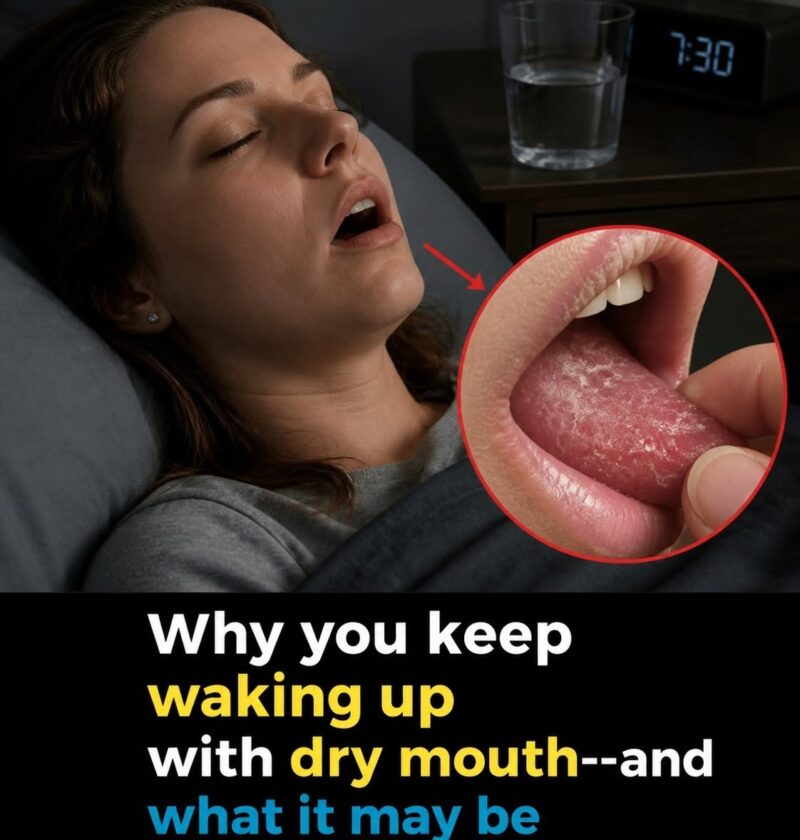
Waking up with a dry mouth is common and usually not a sign of something serious, but if it happens regularly, it can sometimes point to an underlying issue. (nhs.uk)
🌙 Common reasons
- Mouth breathing while sleeping
A blocked nose, snoring, or simply sleeping with your mouth open can dry out the mouth overnight. (nhs.uk) - Not enough fluids
Dehydration can cause dry mouth, thirst, dark urine, and reduced urination. (nhs.uk) - Medications
Many medicines—including some for depression, anxiety, blood pressure, allergies, and pain—can cause dry mouth. Don’t stop prescribed medication without medical advice. (Mayo Clinic) - Sleep apnea 😴
Waking with a dry mouth can occur with sleep apnea, particularly if you also snore loudly, gasp/choke during sleep, wake with headaches, or feel unusually sleepy during the day. (Mayo Clinic) - Certain medical conditions
Persistent dry mouth can occasionally be associated with conditions such as diabetes or Sjögren’s syndrome. (nhs.uk)
💧 What you can try
Keep water beside your bed, drink regularly during the day, limit excessive caffeine and alcohol, and consider sugar-free gum to stimulate saliva. An alcohol-free mouthwash can also help. (nhs.uk)
If the dryness continues for several weeks, makes eating or speaking difficult, or occurs along with frequent urination, persistent thirst, dry eyes, mouth pain, or white patches, talk to a doctor or dentist. (nhs.uk)
One important point: waking with a dry mouth by itself does not mean you have diabetes or sleep apnea; there are many much simpler explanations.