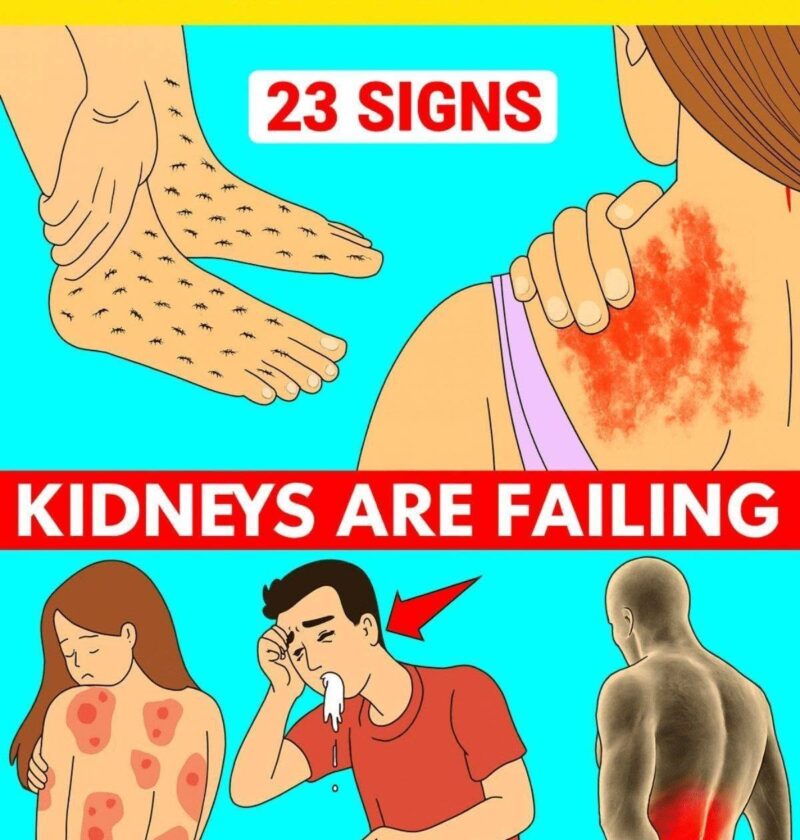
23 Strange Signs Your Kidneys Might Be in Trouble
Your kidneys play a vital role in filtering waste from your blood, balancing fluids, controlling blood pressure, and supporting healthy red blood cell production. Kidney problems can develop quietly, and early signs are not always obvious.
Having one of these symptoms does not mean you have kidney disease, but persistent or worsening changes are worth discussing with a healthcare professional.
1. Changes in Urination
Kidney problems may cause:
- Needing to urinate more often, especially at night
- Urinating much less than usual
- Difficulty starting urination
- Increased urgency
- Changes in urine colour or appearance
2. Foamy or Bubbly Urine
Persistent foaminess may sometimes indicate protein in the urine, which can occur when the kidneys’ filtering system is affected.
3. Blood in the Urine
Pink, red, or brown urine can have many causes, including infections or kidney stones, but blood in urine should be medically assessed.
4. Swelling in the Ankles, Feet, or Hands
When kidneys cannot remove enough fluid, fluid may build up and cause:
- Puffy ankles
- Swollen feet
- Tight rings or shoes
5. Puffiness Around the Eyes
Swelling around the eyes, especially in the morning, can sometimes be linked to fluid retention or protein loss.
6. Persistent Fatigue
Kidney disease can contribute to tiredness due to:
- Anaemia
- Waste buildup in the blood
- Poor sleep
7. Trouble Sleeping
Kidney problems may be associated with:
- Itching at night
- Restless legs
- Frequent urination interrupting sleep
8. Dry, Itchy Skin
A buildup of waste products or mineral imbalances can contribute to persistent itching.
9. Muscle Cramps
Changes in minerals such as calcium and phosphorus may contribute to cramps or muscle discomfort.
10. Poor Appetite
Some people with advanced kidney problems experience:
- Reduced appetite
- Food tasting different
- Nausea
11. Nausea or Vomiting
Waste products accumulating in the blood can affect digestion and appetite.
12. Metallic Taste or Bad Breath
Some people notice an unusual taste in the mouth or breath changes.
13. Trouble Concentrating or “Brain Fog”
Severe kidney dysfunction can affect mental clarity and concentration.
14. Shortness of Breath
This can occur due to:
- Fluid buildup
- Anaemia
- Effects on the heart and circulation
15. High Blood Pressure
Kidney disease and high blood pressure are closely linked. Kidney problems can contribute to difficult-to-control blood pressure.
16. Back or Side Pain
Pain in the flank area may occur with conditions such as kidney stones or infections, though many kidney diseases do not cause pain.
17. Feeling Cold More Often
Anaemia related to kidney disease may contribute to feeling unusually cold.
18. Dizziness or Weakness
These may be related to anaemia, blood pressure changes, or fluid imbalance.
19. Unexplained Weight Changes
Fluid retention can cause sudden weight gain, while loss of appetite may contribute to weight loss.
20. Numbness or Tingling
Advanced kidney disease can sometimes affect nerves, causing unusual sensations.
21. Persistent Hiccups
Rarely, severe kidney dysfunction can be associated with ongoing hiccups.
22. Changes in Skin Colour or Appearance
Some people with advanced kidney problems may notice changes related to anaemia or waste buildup.
23. Feeling Generally Unwell
A vague sense of being unwell, especially with several symptoms together, can sometimes signal an underlying health issue.
Who Is at Higher Risk of Kidney Disease?
Risk is higher with:
- Diabetes
- High blood pressure
- Family history of kidney disease
- Older age
- Heart disease
- Obesity
- Long-term use of certain medicines (such as some painkillers)
Tests That Check Kidney Health
A healthcare professional may use:
- Blood tests (such as creatinine and estimated glomerular filtration rate, eGFR)
- Urine tests (checking protein or blood)
- Blood pressure measurements
When to Seek Medical Advice Urgently
Seek prompt medical attention for:
- Sudden severe reduction in urine output
- Blood in urine
- Severe swelling
- Chest pain or severe shortness of breath