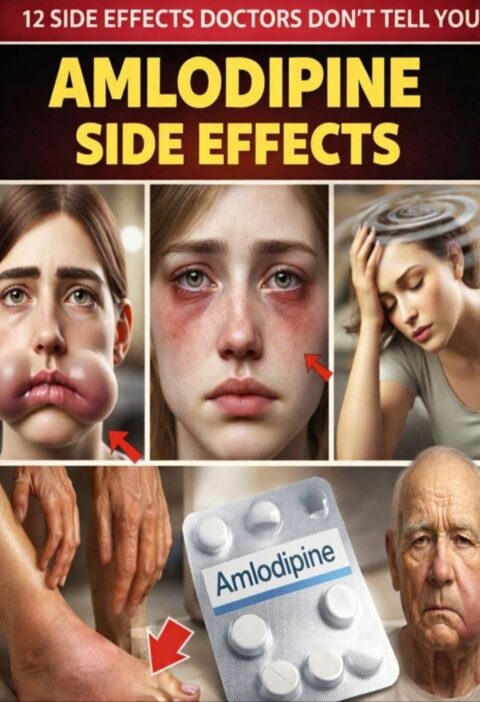
The headline “8 habits you should stop if you take amlodipine” is somewhat sensationalized. Amlodipine is commonly used for high blood pressure and angina, and most people can take it safely when prescribed correctly. The key is avoiding habits that can worsen side effects or interfere with treatment. (nhs.uk)
8 habits to avoid or reconsider
- 🍊 Eating grapefruit or drinking grapefruit juice
NHS guidance advises avoiding grapefruit while taking amlodipine because it can increase the chance of side effects. (nhs.uk) - 🍺 Drinking a lot of alcohol
Alcohol can increase the blood-pressure-lowering effect and make dizziness or low blood pressure more likely. (nhs.uk) - 💊 Stopping amlodipine because you feel well
High blood pressure often has no symptoms. Don’t stop or change the dose without medical advice. Amlodipine is intended to control blood pressure over the long term. (nhs.uk) - 🚫 Ignoring persistent ankle swelling
Swelling of the feet and ankles is the most common adverse effect and becomes more likely at higher doses. Tell your clinician if it’s troublesome or persistent. (DailyMed) - 🚗 Driving when you’re dizzy or sleepy
Amlodipine can cause dizziness or sleepiness. If this happens, don’t drive or operate machinery until you feel normal again. (nhs.uk) - 🌿 Taking supplements or herbal remedies without checking first
Some medicines and supplements can interact with amlodipine. NHS specifically lists medicines such as certain antifungals, antibiotics, immunosuppressants and the herbal remedy St John’s wort. (nhs.uk) - 💊 Assuming every new medicine is automatically safe with amlodipine
Tell your doctor or pharmacist that you take amlodipine before starting another prescription or over-the-counter medicine. There is also a specific interaction with simvastatin: the U.S. prescribing information says simvastatin should not exceed 20 mg daily when used with amlodipine. (DailyMed) - 🩺 Ignoring very low blood pressure or fainting
Amlodipine can occasionally cause symptomatic hypotension. Repeated fainting, severe dizziness, or unusually low readings deserve medical evaluation. (DailyMed)
🚨 Seek urgent help
Difficulty breathing or swelling of the face, lips, tongue, or throat can indicate a serious allergic reaction. New or worsening chest pain also requires urgent medical attention. (nhs.uk)
Most important: Don’t stop amlodipine simply because you read a list of side effects online. If you’re having a particular symptom—especially ankle swelling, dizziness, palpitations, or fatigue—tell me your dose (2.5, 5, or 10 mg) and I can explain how concerning it is.