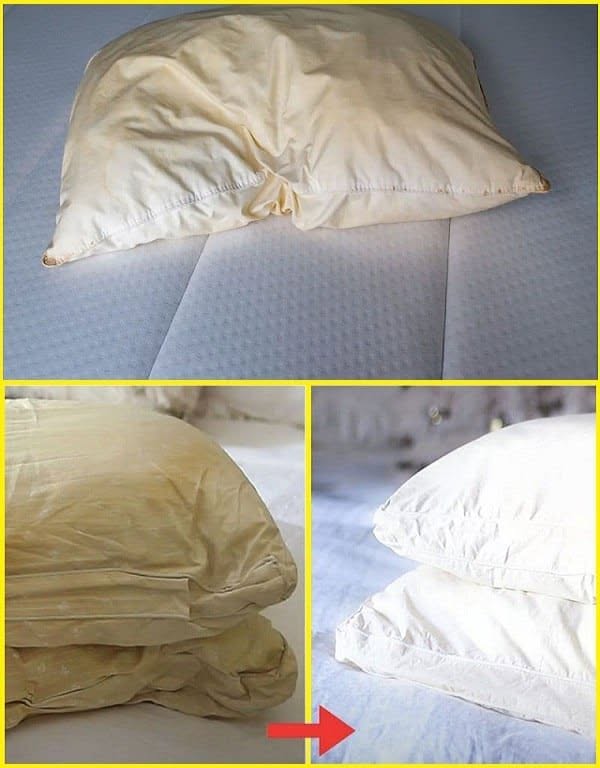
If your pillows have become yellow, stained, or musty, you can often freshen them at home—but check the care label first, because some pillows (especially memory foam and latex) should not be machine-washed.
🛏️ How to clean washable pillows
1. Remove and wash the pillowcase
Wash pillowcases and protectors according to their care instructions. A washable pillow protector can help prevent future stains.
2. Pretreat visible stains
For washable pillows, gently apply a small amount of liquid laundry detergent diluted with water to sweat or body-oil stains. Let it sit for about 10–15 minutes.
3. Wash according to the label
Use the warmest water permitted by the manufacturer’s instructions and a normal amount of detergent. For down or feather pillows, follow the specific care instructions.
4. Rinse thoroughly
An extra rinse can help remove detergent residue.
5. Dry completely
This is crucial. Tumble-dry on the appropriate setting, or air-dry as the label permits. Do not put a pillow back on the bed while it is damp, because trapped moisture can encourage mold and mildew.
🌿 To reduce odors
Once the pillow is completely dry, allow it to air out in a well-ventilated place. You don’t need to heavily perfume it; strong fragrances can irritate some people.
⚠️ What about baking soda and bleach?
Baking soda is sometimes recommended for deodorizing, but it isn’t necessary for routine pillow cleaning. Don’t use chlorine bleach unless the manufacturer specifically says it’s safe—it can damage fibers and fillings.
And never mix bleach with vinegar, ammonia, or other household cleaners.
When to replace the pillow
If a pillow remains musty after thorough washing and drying, has visible mold, has damaged filling, or no longer provides adequate support, replacing it is usually better than repeatedly trying to rescue it.
Tip: A washable pillow protector underneath the pillowcase is one of the easiest ways to keep pillows cleaner and reduce buildup from sweat, oils, and skin products.