5 Diabetes Symptoms That May Be Noticeable at Night
Sometimes your body gives subtle clues that blood sugar may be too high—or, in someone already taking diabetes medication, too low. These symptoms aren’t proof of diabetes by themselves, but recurring or unexplained symptoms are worth discussing with a healthcare professional.
1. Waking up repeatedly to urinate
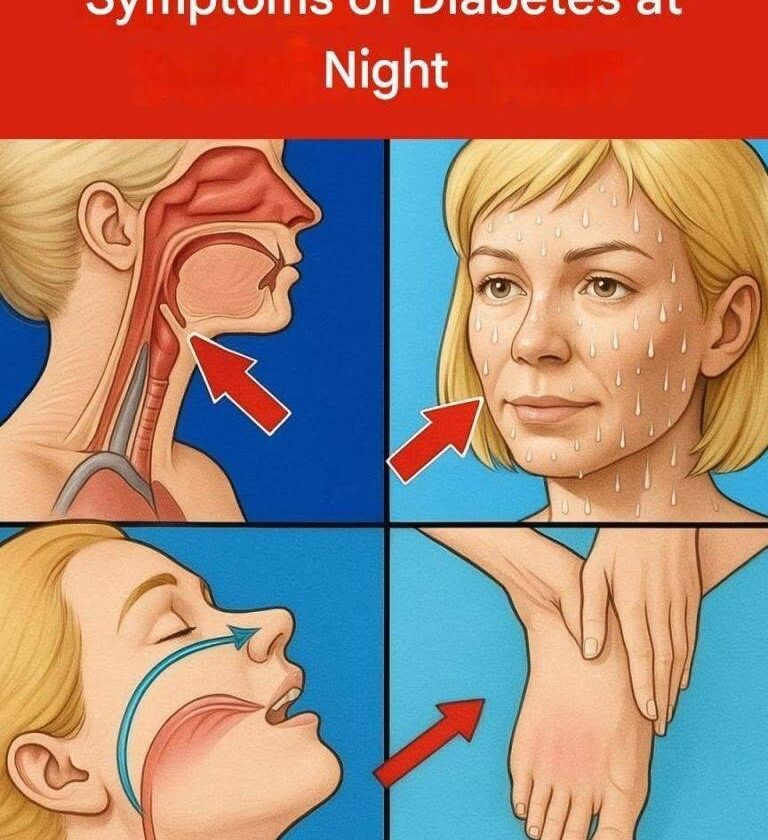
Needing to get up several times during the night to urinate can have many causes. However, frequent urination is a recognized symptom of diabetes. When blood glucose is high, the kidneys work to remove excess glucose through urine, which can increase urination and thirst.
2. Excessive thirst at night
If you regularly wake up extremely thirsty or need to drink water throughout the night, don’t automatically assume it’s simply because the room is warm.
Increased thirst is one of the classic symptoms associated with diabetes, particularly when accompanied by frequent urination.
3. Night sweats, shakiness, or a racing feeling
For someone taking insulin or certain diabetes medicines, blood sugar can sometimes fall too low during the night.
Low blood glucose can cause sweating, shakiness, headache, dizziness, hunger, irritability, or confusion.
If you repeatedly wake up sweaty, shaky, confused, or with other suspected low-blood-sugar symptoms, talk with your healthcare professional about your glucose levels and medications.
4. Unusual fatigue or poor sleep
Diabetes can cause fatigue, and nighttime symptoms such as frequent urination or episodes of abnormal blood glucose can interfere with sleep.
Fatigue alone is not specific to diabetes—stress, insufficient sleep, sleep apnea, anemia, medications, and many other conditions can cause it.
5. Dry mouth and persistent thirst
Waking with a very dry mouth or strong thirst can occur for many reasons, including mouth breathing, dehydration, medications, or a dry environment.
But when persistent thirst occurs together with frequent urination, unexplained weight loss, fatigue, or blurred vision, diabetes should be considered and testing may be appropriate.
Other warning signs to watch for
Diabetes can also cause increased hunger, blurred vision, unexplained weight loss, slow-healing sores, recurrent infections, and numbness or tingling in the hands or feet. Some people with type 2 diabetes have few or no noticeable symptoms, so symptoms alone cannot confirm or rule out diabetes.