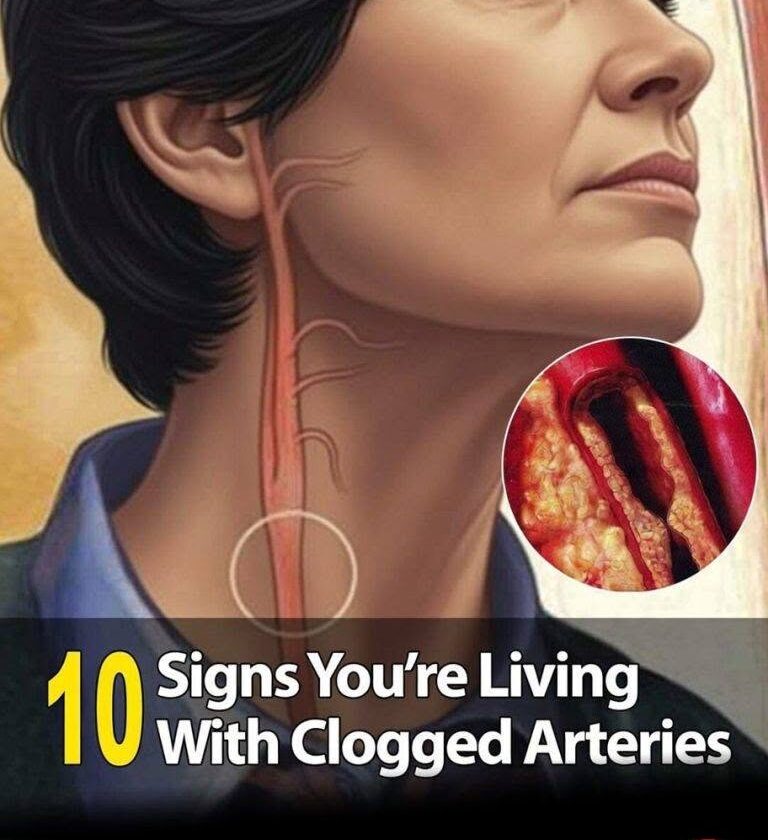
10 Indicators of Blocked Arteries You Shouldn’t Ignore
“Blocked arteries” can refer to atherosclerosis, where fatty deposits build up inside arteries and restrict blood flow. The symptoms depend on which arteries are affected, and some people have no symptoms until the disease becomes serious.
10 warning signs
- Chest pressure or pain — especially with physical activity; this can be a sign of reduced blood flow to the heart.
- Shortness of breath — particularly during exertion.
- Pain or heaviness in the legs when walking — which improves after resting, a possible sign of peripheral artery disease.
- Coldness or numbness in a foot or leg — especially if one side is noticeably different.
- Slow-healing wounds on the feet or legs — reduced circulation can interfere with healing.
- Sudden weakness or numbness on one side — this may indicate a stroke or transient ischemic attack (TIA).
- Sudden trouble speaking or understanding speech — another important stroke warning sign.
- Sudden vision changes — particularly loss of vision in one or both eyes.
- Erectile dysfunction — in some men, reduced blood flow can be associated with vascular disease.
- No symptoms at all — this is important because atherosclerosis can remain silent for years and may be discovered through blood-pressure, cholesterol, vascular, or heart testing.
🚨 Don’t wait with sudden symptoms
Chest pain/pressure, severe shortness of breath, or sudden weakness, facial drooping, speech difficulty, or vision loss require emergency medical attention. These can be signs of a heart attack or stroke.
Having one of these symptoms doesn’t necessarily mean an artery is blocked. A healthcare professional may need to evaluate other possible causes and assess cardiovascular risk factors such as high blood pressure, high cholesterol, diabetes, smoking, and family history.