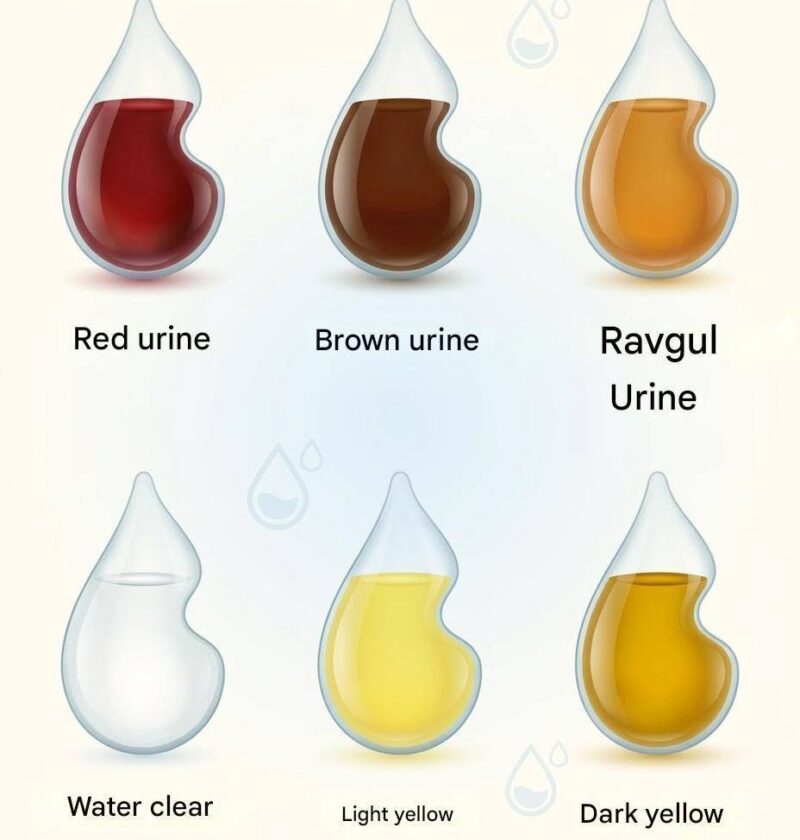
Urine color can give you useful clues about hydration and sometimes health, but color alone cannot diagnose a condition.
- 🟨 Pale yellow: Usually a sign of good hydration.
- 🟡 Dark yellow/amber: Often means you need more fluids.
- 💧 Very clear/colorless: You may be drinking more water than necessary, though it can also be normal.
- 🟠 Orange: Can result from dehydration or certain medicines; persistent orange urine should be discussed with a clinician.
- 🩷/🔴 Pink or red: May be caused by blood, certain foods (such as beets), or medicines. Unexplained blood in urine should be medically evaluated.
- 🟤 Dark brown: Can occur with severe dehydration or certain liver, muscle, or other medical problems and warrants medical attention if persistent.
- 🟢/🔵 Green or blue: Uncommon; certain medications, dyes, or infections can cause this.
- ☁️ Cloudy urine: Sometimes associated with a urinary infection, crystals, or other causes—especially if accompanied by burning, urgency, fever, or pain.
Bottom line: Pale yellow is generally a good target. If your urine suddenly changes color without an obvious explanation, or the change persists, it’s worth getting medical advice.