If you’re turning this into a health/safety article, the headline is too absolute. Cracks inside a watermelon do not automatically mean it is unsafe to eat. Internal cracks can occur for several reasons, including growing conditions, and the fruit should be judged by its appearance, smell, texture, and storage history.
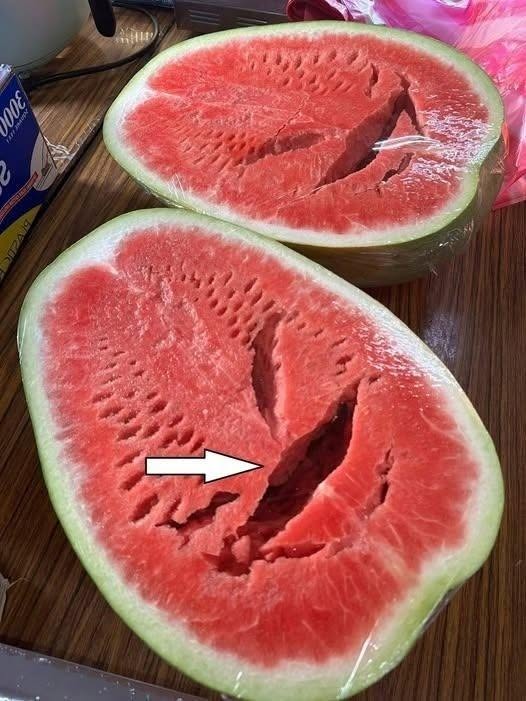
You Cut Open a Watermelon and See Cracks? Here’s What They Really Mean
Seeing cracks or hollow areas inside a watermelon can be surprising, but cracks alone aren’t proof that the fruit has gone bad.
When you should throw it away
- Foul, fermented, or unusual smell
- Slimy or unusually soft flesh
- Mold or visible fungal growth
- Brown, black, or otherwise suspicious discoloration
- Juice that looks or smells abnormal
- The watermelon was cut and left unrefrigerated for too long
- You aren’t confident it was stored safely
If the watermelon looks normal, smells fresh, and has been properly refrigerated after cutting, internal cracks by themselves don’t necessarily make it unsafe.
Why do internal cracks happen?
Watermelons can develop internal cavities or cracks because of rapid growth, fluctuations in water availability, temperature, or other growing conditions. These defects can affect texture and quality without necessarily indicating harmful contamination.
Bottom line: Don’t panic just because you see cracks. Check the fruit for signs of spoilage and consider how it was handled and stored. When in doubt—especially if there is an unusual odor, slime, or mold—throw it away rather than taking a risk.