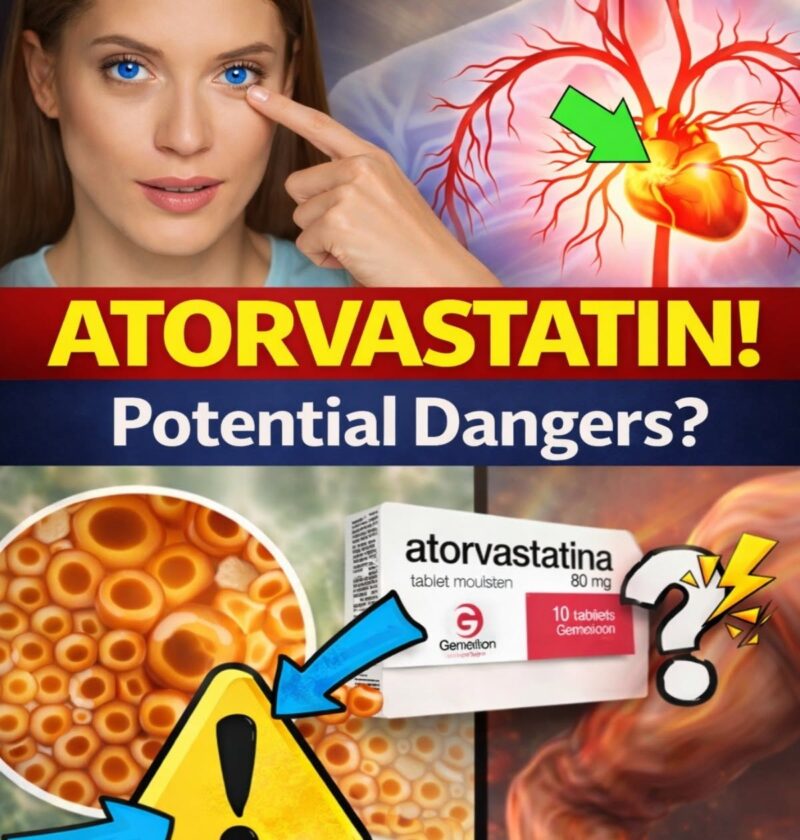
The headline “15 Hidden Atorvastatin Side Effects Your Doctor Might Never Mention” is sensationalized. Atorvastatin (Lipitor) is a well-established statin used to lower cholesterol and reduce the risk of heart attack and stroke, but like any medicine, it can cause side effects. (nhs.uk)
Possible side effects
Some reported effects include:
- Muscle aches, cramps, or weakness
- Headache or dizziness
- Nausea or digestive problems, including diarrhea or constipation
- Sleep problems
- Joint or extremity pain
- Changes in liver enzymes
- Increased blood glucose/HbA1c
- Memory problems or confusion have been reported, although these are not among the common effects. (FDA Access Data)
⚠️ The rare but important ones
The most important serious reaction is myopathy/rhabdomyolysis, where muscle tissue breaks down. In severe cases this can damage the kidneys. The risk is higher with factors such as older age, kidney impairment, uncontrolled hypothyroidism, higher doses, and certain drug interactions. (FDA Access Data)
Rarely, atorvastatin can also cause significant liver injury. Warning signs include yellow skin or eyes, dark urine, unusual weakness, loss of appetite, or upper-abdominal pain. (nhs.uk)
What should you do?
Don’t stop atorvastatin on your own. Stopping a statin can allow cholesterol levels to rise and remove some of its protection against heart attack and stroke. If you develop persistent or troublesome symptoms, talk to your doctor or pharmacist; the dose or statin can sometimes be changed. (nhs.uk)
Seek prompt medical attention for unexplained severe muscle pain or weakness, particularly with fever or dark/brown urine, or for symptoms suggesting serious liver injury. (FDA Access Data)
Also tell your clinician about your other medicines and supplements. Certain antibiotics, antifungals, heart medicines, HIV/hepatitis medicines, and grapefruit juice can increase atorvastatin-related risks. (nhs.uk)
Bottom line: “15 hidden side effects your doctor won’t mention” is a clickbait framing. There are genuine risks, but serious complications are uncommon, and for people who need it, the cardiovascular benefits of atorvastatin can be substantial.