If you want a detailed, medically accurate version, I’d avoid claiming that high cholesterol itself usually causes five symptoms. Most people with high LDL cholesterol have no symptoms, and a blood test is the reliable way to detect it. (international.heart.org)
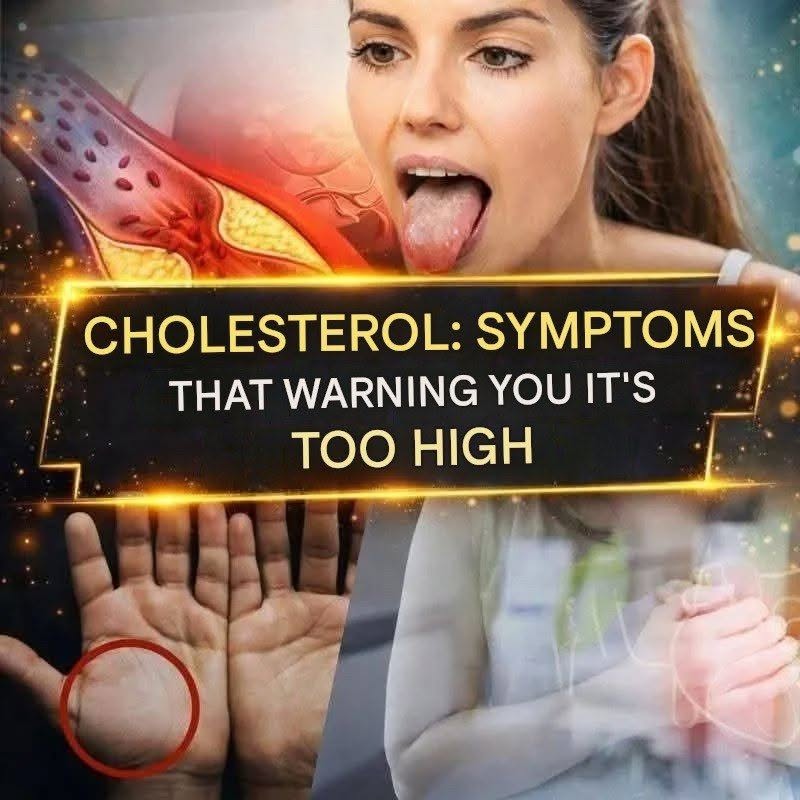
🫀 Cholesterol: 5 Warning Signs You Shouldn’t Ignore
High cholesterol is often called a “silent” problem because most people feel completely normal even when their LDL (“bad”) cholesterol is elevated. That’s why regular cholesterol testing is so important. (international.heart.org)
However, in people with very high cholesterol—especially inherited familial hypercholesterolemia (FH)—certain physical signs can sometimes appear.
1. 🟡 Yellowish patches around the eyes
Soft yellow deposits around the eyelids, known as xanthelasma, can occur when cholesterol accumulates in the skin. They don’t prove that your cholesterol is high, but they can be a reason to have your lipid levels checked.
2. 👁️ A gray or white ring around the cornea
A ring around the outer edge of the cornea, called corneal arcus, can be associated with cholesterol deposits. It becomes more common with age, so in younger people it may warrant medical evaluation, particularly when combined with a family history of high cholesterol. (CDC)
3. 🦶 Firm lumps or thickening around tendons
Cholesterol can accumulate in the Achilles tendons and tendons of the hands or elbows, producing lumps or thickened areas called tendon xanthomas. This is particularly associated with familial hypercholesterolemia. (www.heart.org)
4. ❤️ Chest pain or pressure
High cholesterol itself usually doesn’t cause chest pain. Over time, however, excess LDL can contribute to plaque buildup in the arteries, increasing the risk of coronary artery disease. Chest pressure or pain—especially with shortness of breath, sweating, nausea, or pain spreading to the arm or jaw—can be an emergency and requires immediate medical attention. (www.heart.org)
5. 🧠 Sudden symptoms of a stroke
High cholesterol can contribute to atherosclerosis, which increases cardiovascular risk. Sudden weakness or numbness, trouble speaking, facial drooping, severe dizziness, or difficulty seeing can indicate a stroke and require emergency medical care. (www.heart.org)
⚠️ The most important point
Don’t wait for symptoms to check your cholesterol. High LDL cholesterol commonly causes no noticeable symptoms. A lipid blood test is the way to find out whether your cholesterol levels are elevated. (international.heart.org)
If you have a family history of very high cholesterol or heart attack at a young age, talk with a healthcare professional about whether you should be evaluated for familial hypercholesterolemia. (www.heart.org)
Know your numbers. Protect your heart. ❤️