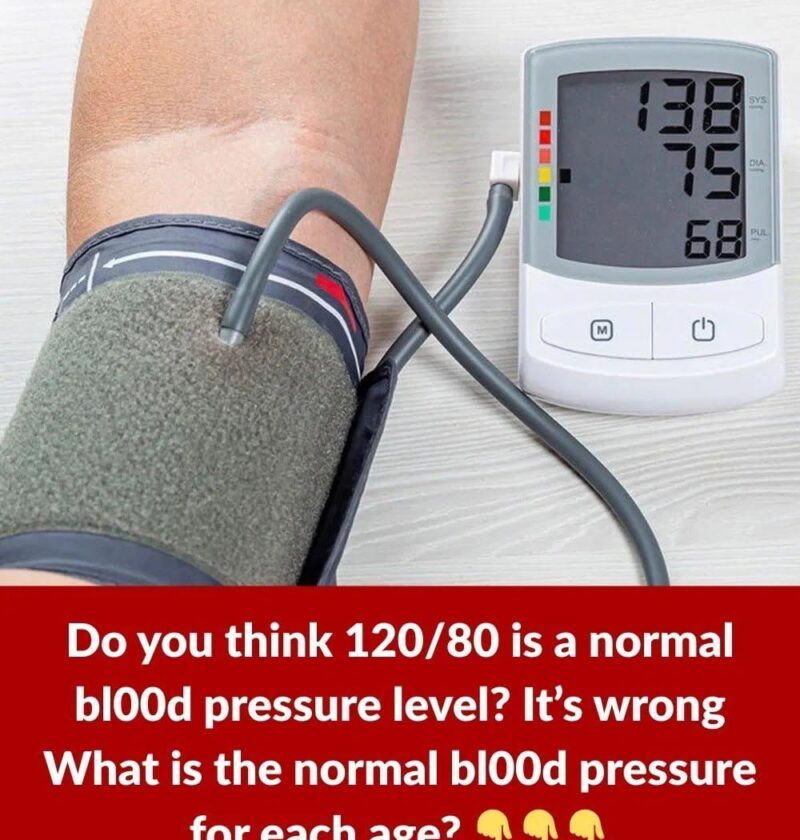
If you’re asking for a clear, accurate age-by-age guide to normal blood pressure, there is one important correction: there isn’t a single “normal BP” number for every age. In children, normal BP depends on age, sex, and height; from adolescence onward, standard adult thresholds are used. (AAP Publications)
🩺 Normal blood pressure by age
| Age | General guide |
|---|---|
| Infants (<1 year) | BP varies considerably with age and circumstances; pediatric reference charts are used rather than one fixed number. |
| 1–5 years | Usually assessed using age, sex, and height percentiles. Below the 90th percentile is considered normal. |
| 6–12 years | Also assessed using age, sex, and height. Below the 90th percentile is normal. |
| 13+ years | Below 120/80 mmHg is considered normal. |
| Adults | Below 120/80 mmHg is normal. |
For children under 13, a reading can’t reliably be classified as normal simply by saying “it should be 120/80.” Pediatric guidelines use growth-adjusted percentiles. (AAP Publications)
For people 13 and older
- Normal: <120/<80
- Elevated: 120–129 and <80
- Stage 1 hypertension: 130–139 or 80–89
- Stage 2 hypertension: ≥140 or ≥90 (AAP Publications)
⚠️ The common mistake
One blood-pressure reading doesn’t necessarily mean someone has hypertension. Blood pressure changes with stress, exercise, caffeine, pain, illness, and even how the measurement is taken. A diagnosis generally requires appropriately measured and repeated readings.
If you give me the person’s age and BP reading (for example, “65 years, 150/90”), I can explain whether it is normal, elevated, or high.