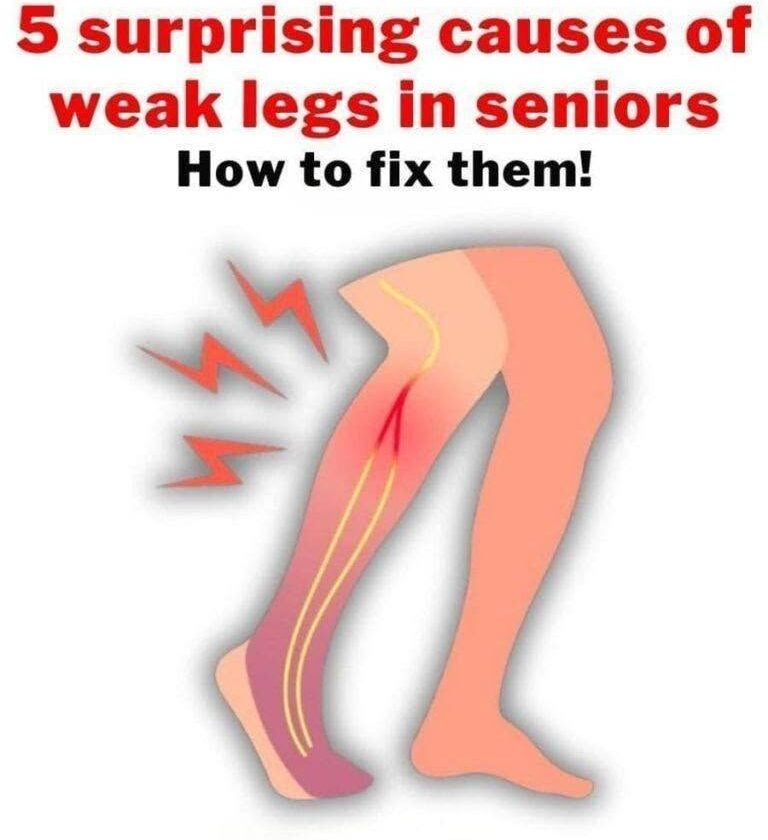
The headline “5 surprising causes of weak legs in seniors—and how to fix them!” is a little sensational. Weak legs in an older adult can have several causes, and the right treatment depends on the cause.
🦵 5 possible causes of weak legs
1. Age-related muscle loss (sarcopenia)
Muscle mass and strength naturally decline with age. Poor nutrition and inactivity can accelerate the process, making it harder to rise from a chair, climb stairs, or walk. (National Institute on Aging)
What helps: appropriately supervised resistance/strength training, regular walking or other activity, and adequate nutrition—especially sufficient protein.
2. Vitamin B12 deficiency or other nutritional problems
B12 deficiency can damage nerves and contribute to weakness, numbness, balance problems, and difficulty walking. (NINDS)
What helps: don’t simply take high-dose supplements; have the suspected deficiency confirmed and treat the underlying cause with a clinician.
3. Nerve problems, including diabetic neuropathy
Damage to peripheral nerves can cause weakness, numbness, burning or poor balance. Diabetes is an important cause, but B12 deficiency and other conditions can also damage nerves. (NINDS)
What helps: treating the underlying condition, managing blood glucose when diabetes is involved, and physical therapy when appropriate.
4. Poor circulation in the legs (peripheral arterial disease)
Peripheral arterial disease can cause aching or cramping in the legs during walking and, in more advanced cases, muscle wasting. (nhs.uk)
What helps: medical evaluation and treatment of cardiovascular risk factors rather than simply taking a circulation supplement.
5. Medication effects or low blood pressure
Some medicines can cause dizziness, weakness, or balance problems, increasing fall risk. Blood pressure that falls excessively when standing can also contribute to falls. (National Institute on Aging)
What helps: have a doctor or pharmacist review all prescription medicines, over-the-counter drugs, and supplements. Don’t stop prescribed medication on your own.
💪 Can weak legs be strengthened?
Often, yes—but first determine why they’re weak. Strength and balance exercises can be particularly valuable for older adults, and addressing nutritional deficiencies, nerve problems, circulation problems, or medication effects can make a major difference. (National Institute on Aging)
🚨 Don’t ignore sudden weakness
Sudden weakness, particularly on one side of the body, or weakness accompanied by difficulty speaking, facial drooping, severe dizziness, or loss of coordination requires urgent medical attention. Progressive weakness, repeated falls, or new difficulty walking also deserves medical assessment.
Bottom line: Weak legs aren’t simply an unavoidable part of getting older. Sometimes the cause is reversible, and identifying it early can help preserve mobility and independence.