1. Iron Deficiency
Thin, spoon-shaped nails can sometimes be associated with iron deficiency. A blood test is needed to confirm it.
2. Thyroid Problems
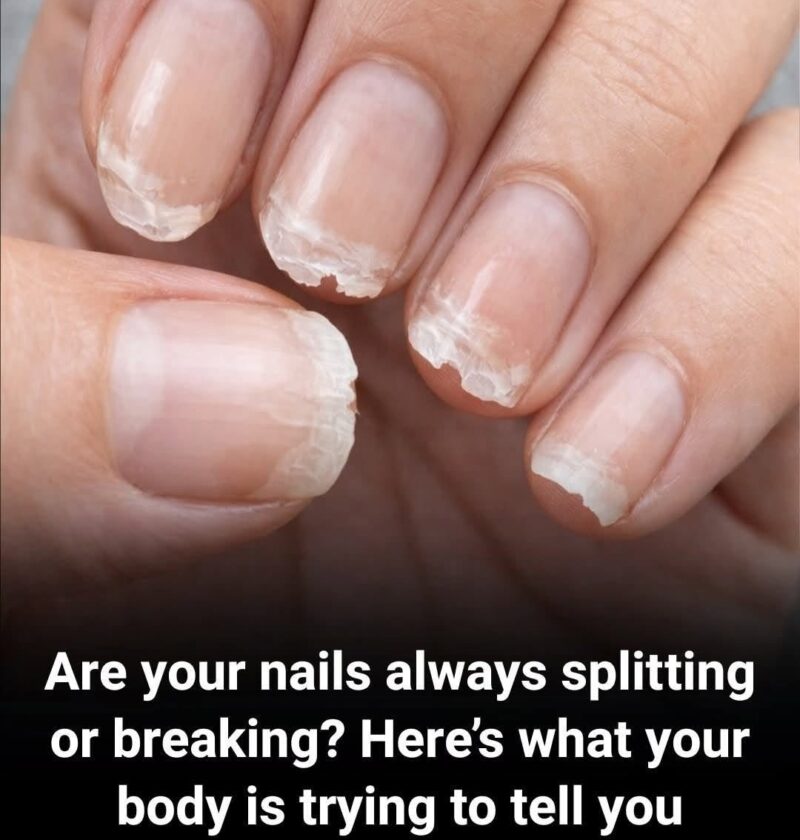
Thyroid disorders can cause nails to become dry, brittle, soft, or prone to peeling and breaking.
3. Fungal Infection
If a nail becomes thick, discolored, cracked, or crumbly, a fungal infection may be responsible.
4. Everyday Damage
Frequent handwashing, cleaning chemicals, prolonged contact with water, and aggressive manicures can weaken nails over time.
5. Aging
Nails naturally become more fragile and grow more slowly with age. Brittle nails alone don’t necessarily mean something is wrong.
What Can You Do?
Keep nails trimmed, moisturize your hands and nails, wear gloves when using cleaning products, and avoid excessive filing or picking.
If nail changes are new, persistent, painful, or accompanied by discoloration, thickening, swelling, or nail lifting, consider seeing a doctor or dermatologist.
Bottom line: Brittle nails are often harmless, but persistent changes can sometimes provide useful clues about iron levels, thyroid problems, infections, or other conditions. Don’t diagnose yourself from your nails alone—get unusual changes checked.