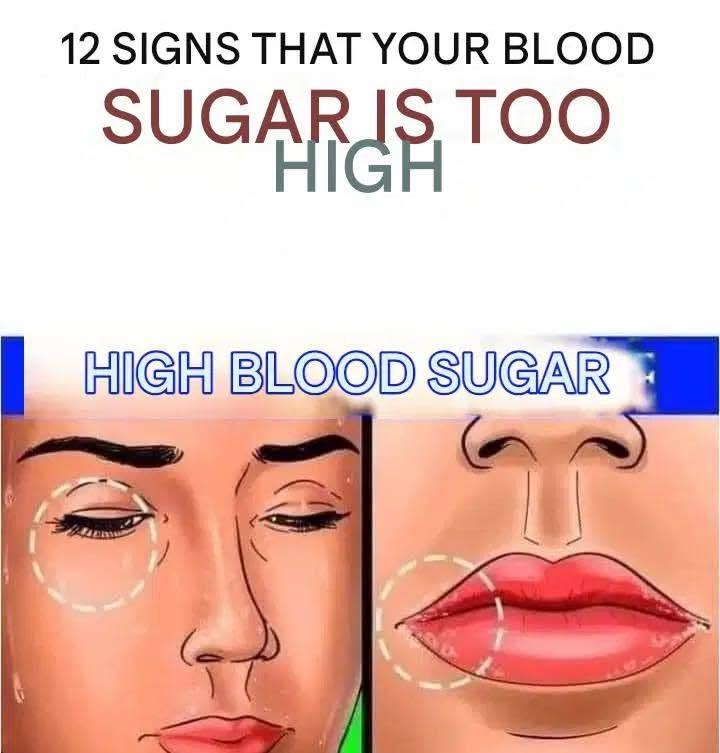
The headline “The High-Sugar Alert: Recognizing the 12 Key Symptoms Your Body Is Showing You” is referring to symptoms that can occur with persistently high blood glucose (hyperglycemia). However, symptoms alone cannot tell you whether your blood sugar is high—a blood test is needed for diagnosis. (NIDDK)
12 possible warning signs
- Excessive thirst
- Frequent urination, including waking at night to urinate
- Increased hunger
- Unexplained weight loss
- Persistent tiredness or weakness
- Blurred vision
- Slow-healing cuts or sores
- Frequent infections, including urinary, skin, or yeast infections
- Numbness or tingling in the hands or feet
- Dry mouth or dry skin
- Mood changes or irritability
- Recurring headaches or difficulty concentrating
The best-established symptoms include increased thirst and urination, hunger, fatigue, unexplained weight loss, blurred vision, slow-healing sores, and recurrent infections. Numbness or tingling can occur with diabetes-related nerve damage, particularly when high glucose has been present for a longer period. (NIDDK)
⚠️ An important catch
Many people with type 2 diabetes have few or no symptoms, especially early in the disease. So feeling fine doesn’t necessarily mean your blood sugar is normal. (NIDDK)
If you’re experiencing several of these symptoms, ask a healthcare professional about HbA1c and/or blood-glucose testing rather than trying to diagnose yourself from symptoms.
🚨 When it’s an emergency
Very high blood sugar can sometimes progress to serious emergencies such as diabetic ketoacidosis (DKA). Vomiting, abdominal pain, rapid/deep breathing, fruity-smelling breath, severe dehydration, confusion, or loss of consciousness require urgent medical attention.
Bottom line: These symptoms can be clues, but they’re not proof of “too much sugar.” Persistent high blood glucose is diagnosed with blood testing, and early diagnosis can help prevent damage to the eyes, kidneys, nerves, heart and other organs. (NIDDK)