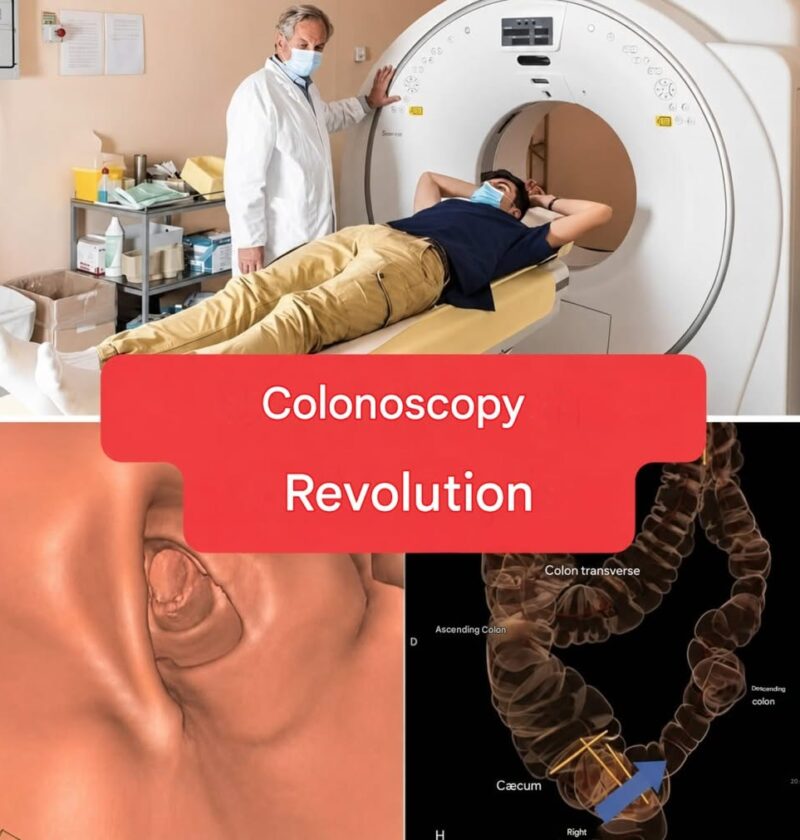
The headline “New method: colonoscopy will no longer be an invasive examination” is misleading if it suggests that traditional colonoscopy has already been replaced.
There are newer, less-invasive ways to screen for colorectal cancer, but they don’t completely replace colonoscopy.
🔬 What are the newer options?
1. Stool tests (FIT)
You collect a stool sample at home, and the test looks for hidden blood. It’s non-invasive and is commonly used for screening. If the result is positive, however, you generally need a colonoscopy to investigate the cause. (EBCCP)
2. Stool DNA tests
These look for blood and molecular changes associated with colorectal cancer. They don’t require a scope, but a positive result still requires colonoscopy. (EBCCP)
3. CT “virtual colonoscopy”
A CT scan creates images of the colon without inserting a traditional colonoscope. It doesn’t require sedation, but bowel preparation is still generally necessary. If a suspicious polyp is found, conventional colonoscopy may still be needed to remove it. (NIDDK)
4. Blood-based screening
Blood tests are now emerging as another option. The American Gastroenterological Association says blood tests can be considered for people who decline established screening methods, but their ability to prevent cancer by finding precancerous polyps is currently lower than that of FIT, stool DNA testing, or colonoscopy. A positive blood test requires follow-up colonoscopy. (Gastroenterology Association)
5. Capsule colonoscopy
A person swallows a small camera capsule that travels through the digestive tract while taking images. This is an exciting technology, but it has not made traditional colonoscopy obsolete. Current guidelines regard capsule endoscopy as a supplementary option in some circumstances rather than a universal replacement. (PubMed Central (PMC))
Why does colonoscopy remain important?
The major advantage of conventional colonoscopy is that doctors can see the colon directly, take biopsies, and remove suspicious polyps during the same procedure. Most non-invasive screening tests can detect signs of cancer or polyps but cannot remove them. (NIDDK)
For average-risk adults, current U.S. recommendations include several choices—such as annual FIT, stool DNA testing every 1–3 years, CT colonography every 5 years, or colonoscopy every 10 years. (EBCCP)
Bottom line: There isn’t currently a new test that means “colonoscopy is no longer necessary.” The good news is that people who dislike or cannot undergo colonoscopy now have several legitimate screening alternatives. The best test is often the one you’re willing to complete consistently.
If you have blood in the stool, unexplained weight loss, persistent change in bowel habits, iron-deficiency anemia, or other concerning symptoms, screening alternatives shouldn’t be used to delay a doctor’s diagnostic evaluation.