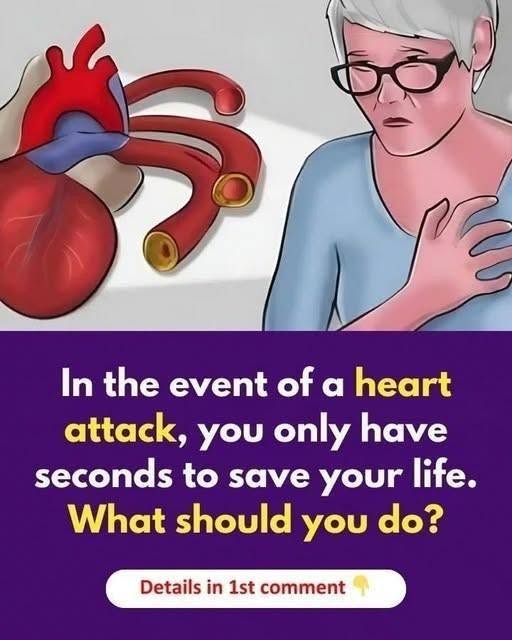
The headline “In the event of a heart attack, you only have seconds to save your life” is dramatic, but the key message is important: getting emergency help quickly saves lives. There is no guaranteed “instant trick” that can stop a heart attack, but the right actions can improve the chances of survival.
If you think you are having a heart attack:
1. Call emergency services immediately
- Call your local emergency number (such as 911/999/112, depending on your location).
- Do not drive yourself to the hospital if emergency help is available.
2. Stop what you are doing and sit or rest
- Sit in a comfortable position, preferably upright.
- Try to stay as calm as possible and avoid physical exertion.
3. Chew aspirin only if appropriate
- If emergency guidance recommends it and you are not allergic, not on a medication that makes it unsafe, and have not been told to avoid aspirin, chewing a standard dose of aspirin may help because it reduces blood clotting.
- If you are unsure, ask the emergency operator.
4. Use prescribed heart medication if you have it
- If you have been prescribed nitroglycerin for chest pain, use it exactly as instructed by your doctor.
5. If you are alone
- Unlock the door if you can.
- Keep your phone nearby.
- Sit near the entrance if possible so responders can reach you.
- Do not try to “walk it off.”
Warning signs of a heart attack
Symptoms can include:
- Chest pressure, squeezing, fullness, or pain
- Pain spreading to the arm(s), back, neck, jaw, or stomach
- Shortness of breath
- Cold sweat
- Nausea or vomiting
- Sudden weakness, dizziness, or fainting
Women, older adults, and people with diabetes may sometimes have less typical symptoms, such as unusual fatigue, breathlessness, or indigestion-like discomfort.
If someone else collapses
- Call emergency services.
- Start CPR if they are not breathing normally.
- Use an automated external defibrillator (AED) if available.