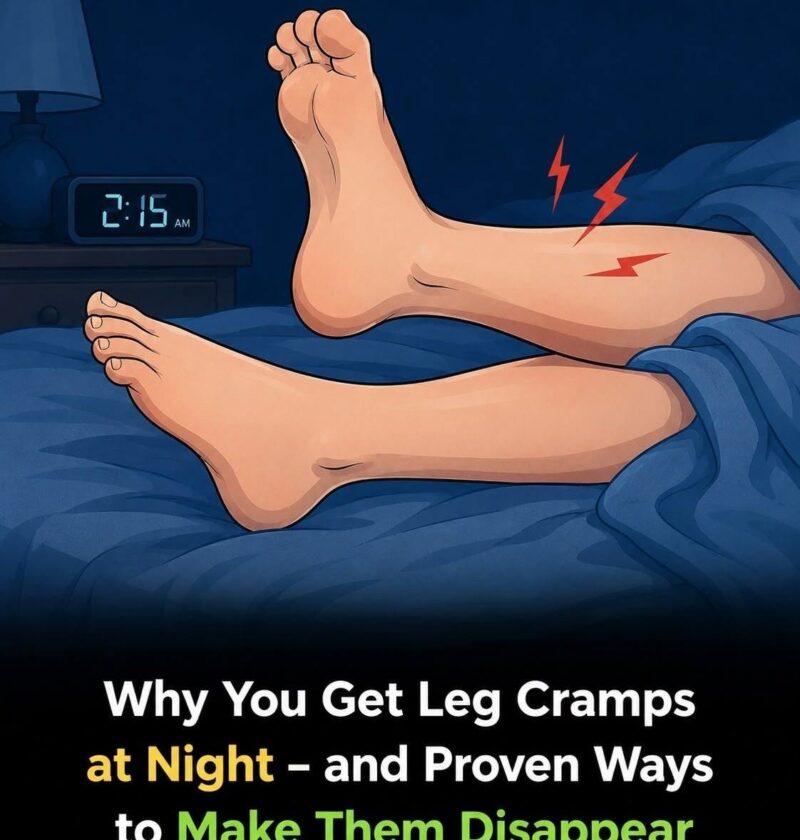
The headline “This is why we get cramps at night” refers to a common problem called nocturnal leg cramps—sudden, painful muscle tightening that often happens in the calves, feet, or thighs during sleep. The exact cause is not always clear, but several factors can contribute.
Common reasons for nighttime cramps
1. Muscle fatigue or overuse
- More walking, standing, exercise, or unusual activity during the day can strain muscles.
- Tired muscles may be more likely to cramp at night.
2. Dehydration
- Not drinking enough fluids can contribute to muscle irritability.
- Heavy sweating or hot weather can increase the risk.
3. Mineral and electrolyte changes
Low levels of certain minerals may contribute, including:
- Magnesium
- Potassium
- Calcium
However, many nighttime cramps are not simply caused by a magnesium deficiency, and taking supplements does not help everyone.
4. Sitting or standing for long periods
Long periods of inactivity can affect muscle function and circulation.
5. Age-related changes
Nighttime cramps become more common with age, possibly due to changes in nerves, muscles, and circulation.
6. Certain medications or health conditions
Cramps can sometimes be associated with:
- Some diuretics (“water pills”)
- Certain cholesterol medicines (in some people)
- Nerve problems
- Kidney disease
- Circulation problems
- Diabetes-related nerve changes
What may help prevent or relieve cramps
✅ Stretch before bed
- Calf stretch against a wall
- Gentle leg stretches
✅ When a cramp happens
- Straighten the leg
- Pull the toes toward your face (for a calf cramp)
- Massage the tight muscle
- Apply warmth if helpful
✅ Stay active
Regular walking and gentle strengthening can reduce recurrence for some people.
✅ Review medications
If cramps started after a new medication, discuss it with your healthcare professional before stopping anything.
When to get medical advice
Talk to a healthcare professional if cramps:
- Are frequent, severe, or worsening
- Cause swelling, redness, or weakness
- Come with numbness or loss of sensation
- Affect your sleep regularly